The Bravery of Asking: 9 Children’s Books About Asking for Help
Your child is stuck—but instead of calling you over, they tug harder, erase a hole through the paper, or insist they do not need anyone. You can see the frustration rising.
They may be afraid of looking incapable, getting in trouble, or hearing an answer they do not want.
Asking for help requires a quiet kind of bravery.
A child has to admit, “I cannot do this alone yet,” and trust another person with that truth.
That is humility at its healthiest: not thinking less of yourself, but seeing yourself clearly enough to know when another hand, idea, or caring presence would help.
These children’s books about asking for help approach that vulnerable moment through schoolwork, inventions, travel, food insecurity, and delightfully impossible mishaps. Some characters ask directly.
Others resist until the cost of pretending becomes clear. Each story can help your child discover that independence and interdependence belong together.
As you read, keep the conversation gentle. The goal is not to push your child into asking sooner than they feel ready. It is to make help feel safe, specific, and available—so courage has somewhere to land.
9 Children’s Books That Make Asking for Help Feel Brave
Pay attention to what happens just before a character accepts support.
Is there embarrassment, anger, worry, or relief? You might ask, “What made asking hard?” and then, “What changed afterward?”
Those questions help children notice that needing help is not the opposite of being capable. Often, it is how capability grows.
Hanna Asks for Help by Tom Percival
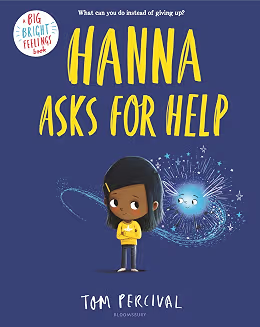
Hanna feels confident on the sports field, where movement comes naturally.
Numbers are different. At school, math seems jumbled and confusing, and the more she struggles privately, the heavier the problem feels.
Tom Percival turns Help into a friendly presence, giving young readers a way to picture support not as a verdict on their ability but as something that can arrive, stay beside them, and make learning possible.
What kids notice: Hanna is good at some things and needs guidance with others. Her difficulty with math does not erase her strengths, and her strengths do not mean she must understand everything alone.
Story snapshot: After her own attempts leave her upset, Hanna finds the courage to ask someone to show her what to do. Once Help enters the picture, the numbers begin to feel manageable, and Hanna also recognizes moments when she can help friends.
Why this book helps: It gives you language for school-related shame. Try saying, “You do not need to know it already; you need to know your next question.” That small shift turns help-seeking into part of learning.
Giraffe Asks for Help by Nyasha M. Chikowore, illustrated by Janet McDonnell
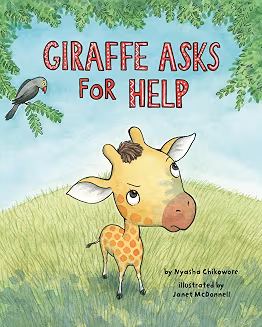
Gary Giraffe is six now, and he believes that means he should be able to reach the tastiest acacia leaves by himself. When stretching, wobbling, and repeated effort do not work, asking feels much harder than another try.
What kids notice: Gary’s friends are capable animals, yet each admits to needing help sometimes. Children see that age, size, speed, and strength do not make anyone completely self-sufficient.
Story snapshot: Gary’s friend Tye Tickbird encourages him to speak up. A cheetah, elephant, lion, and bird then combine their different abilities to steady Gary and bring the branch within reach.
Why this book helps: The story makes asking concrete and gives children a simple script: tell a trusted friend or family member what you cannot do alone. It also shows why a clear request works better than silent frustration.
No Help Wanted! by Ruth Ohi
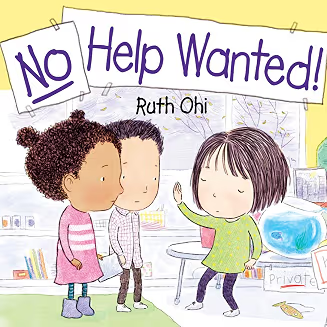
Posy likes having a plan, and she likes being the person who can carry it out. When she eagerly takes responsibility for Bluey, the new classroom fish, admitting uncertainty feels especially risky because everyone may see her mistake.
What kids notice: Bluey begins to look worse despite Posy’s intense attention. Good intentions are not always enough, and hiding a problem can keep the right people from solving it.
Story snapshot: Posy fears that her classmates will blame her for the fish’s condition. To help Bluey recover, she has to acknowledge that her plan is not working and let cooperation replace control.
Why this book helps: It separates responsibility from perfection. You can tell your child, “Being responsible does not mean fixing everything yourself. It means telling someone when the problem is bigger than what you know.”
I Can Do It Myself! by Diane Adams, illustrated by Nancy Hayashi
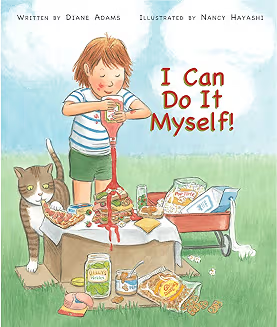
Emily Pearl can pour juice, feed her goldfish, and tackle all kinds of everyday tasks. Her proud refrain will sound familiar to anyone raising a child in the thrilling, messy stage of wanting to do absolutely everything alone.
What kids notice: Emily’s confidence is real, even when the results are imperfect. Later, nighttime shadows make her feel smaller, and the kind of strength she needs changes.
Story snapshot: All day, Emily waves away her mother’s offers. At bedtime, fear softens her determination, and her mother understands that even a very capable child can welcome a helping hand.
Why this book helps: It reassures young children that receiving comfort does not undo independence. A useful question is, “Which parts do you want to try, and which part would you like us to do together?”
Jabari Tries by Gaia Cornwall
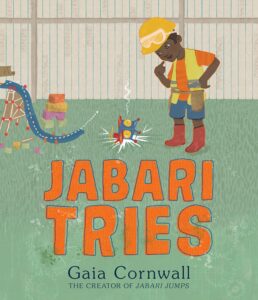
Jabari has an ambitious plan: build a machine that can fly across the backyard. He sketches, constructs, launches—and crashes. He wants to be an inventor who perseveres, but he is less enthusiastic about being an inventor who needs a partner.
What kids notice: Little sister Nika seems more likely to interrupt than contribute, at least from Jabari’s point of view. Children will enjoy spotting how a fresh perspective can come from an unexpected helper.
Story snapshot: Jabari tries modification after modification while his frustration builds. With calm guidance from Dad, he clears his “muddy feelings,” allows Nika to join him, and discovers that her idea helps the machine soar.
Why this book helps: It links humility with creativity. Engineers, artists, and problem-solvers do not lose ownership when they listen; collaboration can reveal the next possibility. Ask your child what Nika could see that Jabari could not.
Going Home by Seymour Chwast

A dog is in the middle of a bath when a wild gust carries him far from home. The premise is gloriously absurd, but the emotional problem is real: when you are lost, unfamiliar people may be the very ones you need.
What kids notice: The dog cannot solve the whole journey at once. Each new encounter brings one timely piece of help, and every kind stranger moves him a little closer to safety.
Story snapshot: Blown halfway around the world, the dog keeps his head and makes his way through unfamiliar places. By asking and accepting assistance from new friends, he eventually finds the route home.
Why this book helps: It opens a natural safety conversation without becoming frightening. Practice the difference between safe helpers and unsafe strangers, and help your child name the adults they can approach if they are lost or separated from you.
Saturday at the Food Pantry by Diane O’Neill, illustrated by Brizida Magro
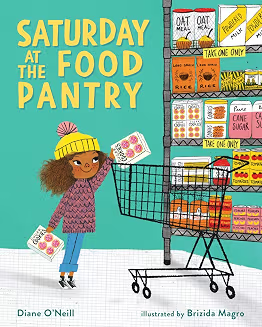
Molly and her mother do not always have enough food. At their first visit to a food pantry, Molly is glad to see groceries, but classmate Caitlin feels embarrassed to be recognized in line.
What kids notice: People at the pantry both give and receive. Molly and Caitlin draw pictures for others while their families accept food, gently undoing the idea that anyone is only a helper or only a person in need.
Story snapshot: Molly carries her mother’s message that everybody needs help sometimes. As the girls create and share pictures, Caitlin’s shame begins to ease, and the pantry becomes a place of dignity and community.
Why this book helps: It treats material need with honesty and respect. Your child learns that accepting food, clothing, counseling, or community support is not a moral failure. Help is one way people care for one another through changing seasons.
Stuck by Oliver Jeffers
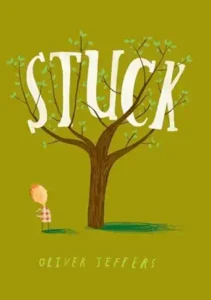
Floyd’s kite lands in a tree. Rather than ask someone for a sensible hand, he throws a shoe after it—and then another shoe, a ladder, a kitchen sink, an orangutan, and increasingly ridiculous objects.
What kids notice: Floyd is impressively committed to a strategy that plainly is not working. Even the people and equipment that might help become tangled in the consequences of his plan.
Story snapshot: The treetop fills with absurd cargo until the kite finally drifts down. Floyd heads happily to bed, forgetting the enormous pile still stuck above him.
Why this book helps: Humor lowers defensiveness. Instead of lecturing about stubbornness, you can laugh together and ask, “When should Floyd have paused?” Then invent three help requests that might have saved him time.
Little Blue Truck by Alice Schertle, illustrated by Jill McElmurry
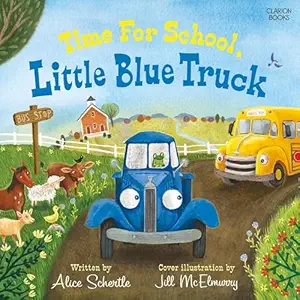
Big Dump Truck barrels down the road, too important to greet the farm animals. Then he sinks into the mud. His strength and size cannot free him, and the neighbors he ignored have little reason to answer his cry.
What kids notice: Little Blue helps anyway—and becomes stuck too. The smallest animal’s effort matters when the whole group pushes together.
Story snapshot: Blue’s everyday friendliness has built real relationships. When both trucks need help, the animals gather, heave, and free them, leaving Dump with a humbler understanding of community.
Why this book helps: It shows that asking is only half the lesson; we also need to appreciate the people who respond. Talk about how gratitude, friendliness, and offering help make it easier for everyone to need one another.
Put Your Child in the Heart of the Story
Sometimes a child can explain courage more easily when the problem belongs to a character. In a personalized Scrively story, your child can become the hero facing a tower that will not stand, a trail with a missing marker, or a riddle whose answer refuses to appear.
The turning point does not have to be a dramatic rescue. It might be the moment your child names the problem, chooses a trustworthy person, and asks one clear question. The helper can support without taking over, leaving your child inside the adventure as an active problem-solver. Personalized this way, humility feels less like surrender and more like a brave tool the hero knows how to use.
Help Is a Bridge, Not a Defeat
Your child will not always ask gracefully. Sometimes “Help me” arrives disguised as tears, avoidance, silliness, or anger. You can look beneath the behavior and offer language: “This seems stuck. Would you like a hint, a hand, or company while you try again?” Specific choices preserve dignity.
Let your child see you ask, too. Request directions. Admit when you do not understand. Thank the person who shows you something. When adults model help-seeking without apology, children learn that competence is not knowing everything; it is knowing how to move forward.
The bravest words are often small. “I’m lost.” “I’m worried.” “Can you show me?” Each one opens a bridge from isolation to connection. With practice—and stories like these—your child can learn that reaching for a steady hand is not stepping away from courage. It is stepping straight into it.