Children’s Books About Saying “I Was Wrong” and Taking Accountability
Your child’s face changes the moment they realize they were wrong.
Maybe their eyes drop. Maybe a quick excuse arrives before you can even speak. Beneath that resistance is often something tender: the fear that one bad choice might make them a bad person.
Accountability asks children to do something genuinely brave.
They must look at what happened, name their part, and stay present long enough to make things better. That is much harder than mumbling “sorry” on command. It requires honesty without collapse, remorse without shame, and the belief that a relationship can survive the truth.
Stories let your child practice this courage at a safe distance. They can feel a character’s tight stomach, hear the tempting excuses, and watch the world soften when the truth finally comes out.
The books below show that admitting a mistake is not the end of the story. Very often, it is the first step toward repair.
9 Children’s Books That Make Accountability Feel Possible
These picture books approach accountability from wonderfully different angles: a playground lie, a ruined garden, an unkind note, a found banknote, even a giant bird searching for one very difficult word. As you read, resist rushing to the lesson. Pause where the character hesitates. Ask what their body might be feeling, who was affected, and what a meaningful next step could look like.
Ruthie and the (Not So) Teeny Tiny Lie by Laura Rankin
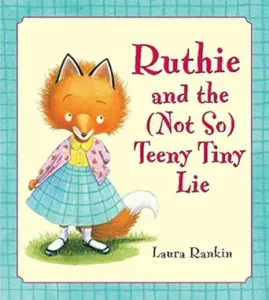
Ruthie adores tiny things, so the tiny camera she finds on the playground feels almost destined to be hers. When Martin says it belongs to him, she claims it anyway. Her lie is small enough to say in one breath, but it quickly becomes too heavy to carry.
What kids notice: Ruthie cannot enjoy her favorite dinner, sleep comfortably, or stop thinking about what she said. Children recognize how a secret can show up in the body before anyone else knows the truth.
Story snapshot: After falsely insisting that Martin’s camera was a birthday gift of her own, Ruthie admits the truth to her teacher and apologizes to Martin. The feared moment becomes manageable once she faces it.
Why this book helps: It separates a dishonest choice from a child’s whole identity. You can use Ruthie’s experience to reassure your child that telling the truth may feel frightening, yet caring adults can help them repair what happened.
Accident! by Andrea Tsurumi
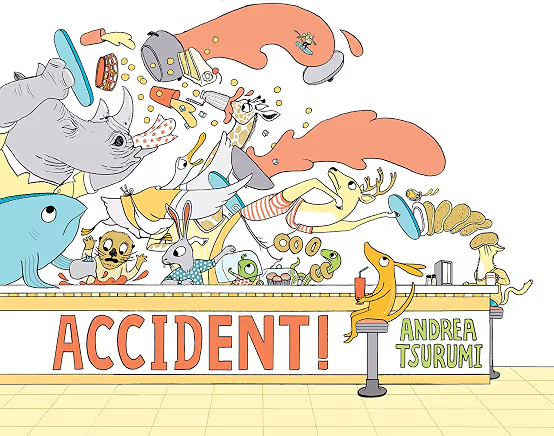
When Lola the armadillo spills red juice on a white sofa, panic takes over. She runs for the library, only to discover a whole city of creatures fleeing spills, crashes, tangles, and other spectacular mishaps.
What kids notice: The mistakes grow funnier and wilder as everyone tries to escape them. Sharp-eyed readers will also see that running away leaves other characters stuck with the mess.
Story snapshot: A small red bird helps Lola understand that naming something an accident is only the beginning. Lola returns home ready to face the stained sofa and help make the situation better.
Why this book helps: Children often use “I didn’t mean to” as if intention erases impact. This story validates that accidents happen while showing that accountability still includes checking on people, cleaning up, and helping with repair.
A Bike Like Sergio’s by Maribeth Boelts, illustrated by Noah Z. Jones
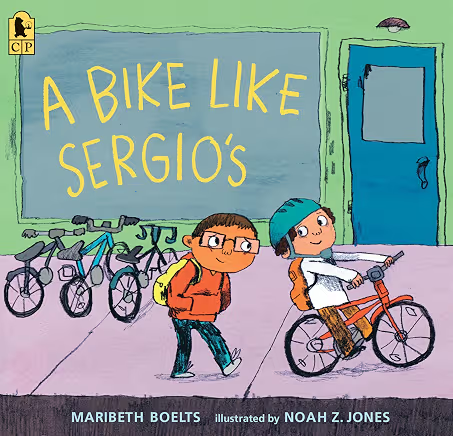
Ruben longs for a bicycle his family cannot afford. When money falls from a woman’s purse at the grocery store, he picks it up—and later discovers it is a hundred-dollar bill. Suddenly the bicycle he imagined is within reach.
What kids notice: Ruben cycles through excitement, secrecy, worry, and empathy. The money feels different once he sees the woman searching for it and understands that his lucky find is someone else’s loss.
Story snapshot: Ruben holds on to the bill while imagining the bike it could buy. Eventually, he goes back and returns the money to its owner, choosing honesty over the thing he wants most.
Why this book helps: Accountability is especially meaningful when no one can force the right choice. This book opens a rich conversation about possession, impact, and the quiet strength required to correct a decision when keeping silent would be easier.
The Honest-to-Goodness Truth by Patricia C. McKissack, illustrated by Giselle Potter
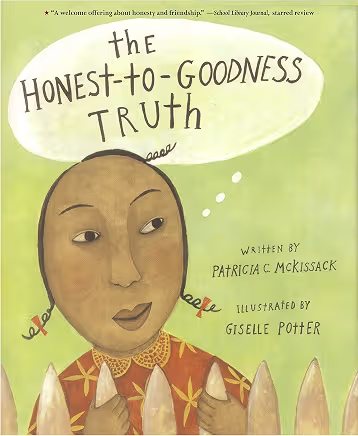
After Libby is caught in a lie, she decides to tell only the truth. But she begins exposing a friend’s worn sock and a classmate’s unfinished homework, leaving hurt feelings wherever she goes.
What kids notice: Libby is baffled that doing what she believes is right keeps upsetting people. When an uncomfortable truth is directed at her, the emotional impact suddenly becomes clear.
Story snapshot: Libby’s rigid truth-telling damages her friendships. By experiencing the sting herself, she recognizes her mistake and begins making amends with greater kindness and discretion.
Why this book helps: Accountability involves more than admitting a factual error. It also means noticing when we use a good rule in a hurtful way. This story helps you discuss truth, privacy, intention, and compassionate delivery.
Sorry! by Trudy Ludwig, illustrated by Maurie J. Manning
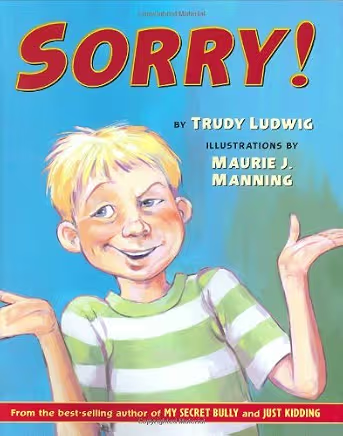
Charlie has learned that a quick “sorry” can make adults back down, even when he has no intention of changing. His friend Jack watches this pattern and begins to question whether one convenient word can really undo harm.
What kids notice: Charlie’s apologies sound correct, yet something feels wrong because his choices keep hurting others. Children quickly understand that tone, follow-through, and changed behavior matter.
Story snapshot: Jack sees Charlie repeatedly avoid consequences by saying he is sorry. As the friendship strains, Jack learns that forgiveness cannot be demanded and that a meaningful apology takes effort.
Why this book helps: It moves the conversation beyond polite scripts. Ask your child what the harmed person needs, what the apologizer can do next, and how repeated actions reveal whether the words were meant.
Sorry (Really Sorry) by Joanna Cotler, illustrated by Harry Bliss
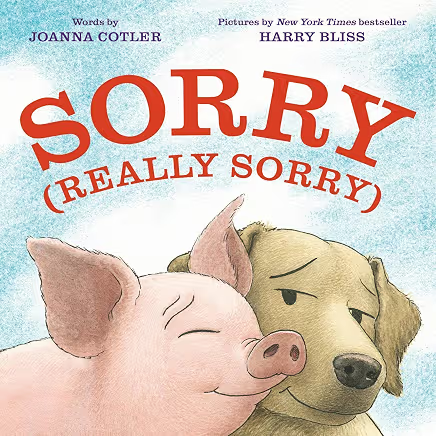
Cow is in a terrible mood and kicks mud at Duck. Duck passes the hurt to Frog, Frog passes it to Bird, and soon one unkind moment has traveled all around the farm.
What kids notice: Every animal can explain why they are grumpy, but their explanation does not protect the next animal from being hurt. Dog’s unexpected kindness changes the rhythm of the entire farm.
Story snapshot: Cow’s bad mood sparks a series of mean encounters. When Dog responds with care instead of retaliation, the animals reconsider their behavior, offer real apologies, and begin mending the damage.
Why this book helps: It helps your child trace impact beyond the first action. Accountability becomes relational: we notice where hurt came from, refuse to pass it onward, and take responsibility for the part that belongs to us.
Lilly’s Purple Plastic Purse by Kevin Henkes
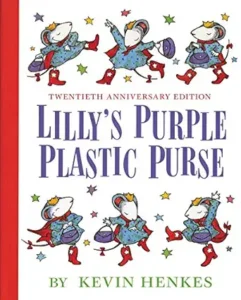
Lilly loves school and adores Mr. Slinger—until he temporarily takes her distracting new treasures. Furious, she draws a cruel picture of him. Then she discovers the kind note and snacks he placed in her purse.
What kids notice: Lilly’s opinion of her teacher flips in an instant, and her regret is equally enormous. Her dramatic emotions feel familiar, especially to children who act first and reflect later.
Story snapshot: After insulting Mr. Slinger in a drawing, Lilly realizes she misjudged him. With support from her family, she returns to school, apologizes, and reconnects with the teacher she still loves.
Why this book helps: The story makes room for both anger and responsibility. You can remind your child that feelings are allowed, while choices made inside those feelings may still require honest words and thoughtful repair.
The Hardest Word: A Yom Kippur Story by Jacqueline Jules, illustrated by Katherine Janus Kahn
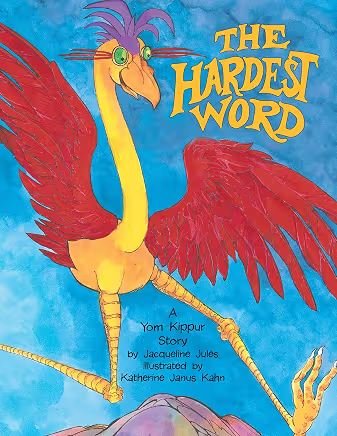
The enormous, well-meaning Ziz is so clumsy that a knocked-down tree destroys the children’s garden. Seeking help, he is told to bring back the hardest word. He searches for long, complicated answers before discovering a short one.
What kids notice: The Ziz tries tongue-twisting words such as “rhinoceros,” assuming difficulty must mean length. The answer is much simpler to pronounce and much harder to mean: “sorry.”
Story snapshot: After ruining the garden, the Ziz asks how to put things right. His search leads him to recognize the harm, express genuine remorse, and understand the difficult work contained in an apology.
Why this book helps: It gives spiritual and emotional weight to saying “I was wrong” without becoming stern. Families of any background can use it to discuss reflection, forgiveness, and why sincere remorse asks something of us.
The Summer My Father Was Ten by Pat Brisson, illustrated by Andrea Shine
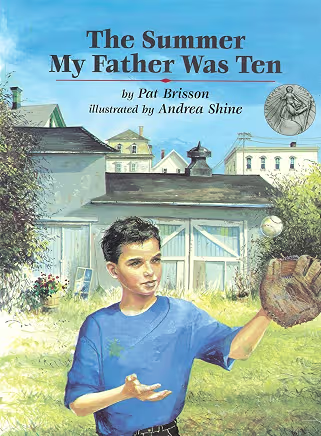
During an impulsive baseball game, a group of boys destroys Mr. Bellavista’s carefully tended garden. One boy returns alone. He cannot restore the lost plants instantly, but he can face the gardener and begin helping.
What kids notice: The boy’s friends disappear after the damage, leaving him to decide whether he will hide with them or step forward. The slow rebuilding makes amends visible and concrete.
Story snapshot: A tomato fight ruins an older neighbor’s garden. The remorseful boy comes back to apologize and work beside Mr. Bellavista, transforming destruction into connection and a lasting tradition.
Why this book helps: This is a powerful example of apology as action. It shows your child that some harm cannot be fixed quickly, yet steady, humble effort can rebuild trust and create something meaningful.
Put Your Child in the Heart of the Story
A child may understand accountability in a read-aloud and still freeze when the mistake is their own. Personalization can narrow that distance. In a Scrively story, your child can become the character who feels the wobble of fear, tells the truth anyway, and discovers that love remains while repair begins.
Keep the imagined situation close to your child’s world: a broken project, an unfair accusation, or words spoken in anger. The most helpful ending is not perfect or painless. It shows your child taking one believable next step—returning, rebuilding, listening, or trying again—so courage feels available in real life.
The Brave Sentence That Opens the Door
When your child admits a mistake, try to notice the courage before correcting the behavior: “Thank you for telling me. Let’s figure out what needs to happen next.” That response does not remove a consequence. It teaches that honesty creates a path forward.
Over time, “I was wrong” can become less like a verdict and more like a doorway. Your child learns that strong people are not people who never fail. They are people who can face what they did, care about its impact, and return to the work of making things right.