
Finding Your Voice: Books to Help Kids Speak Up to Adults
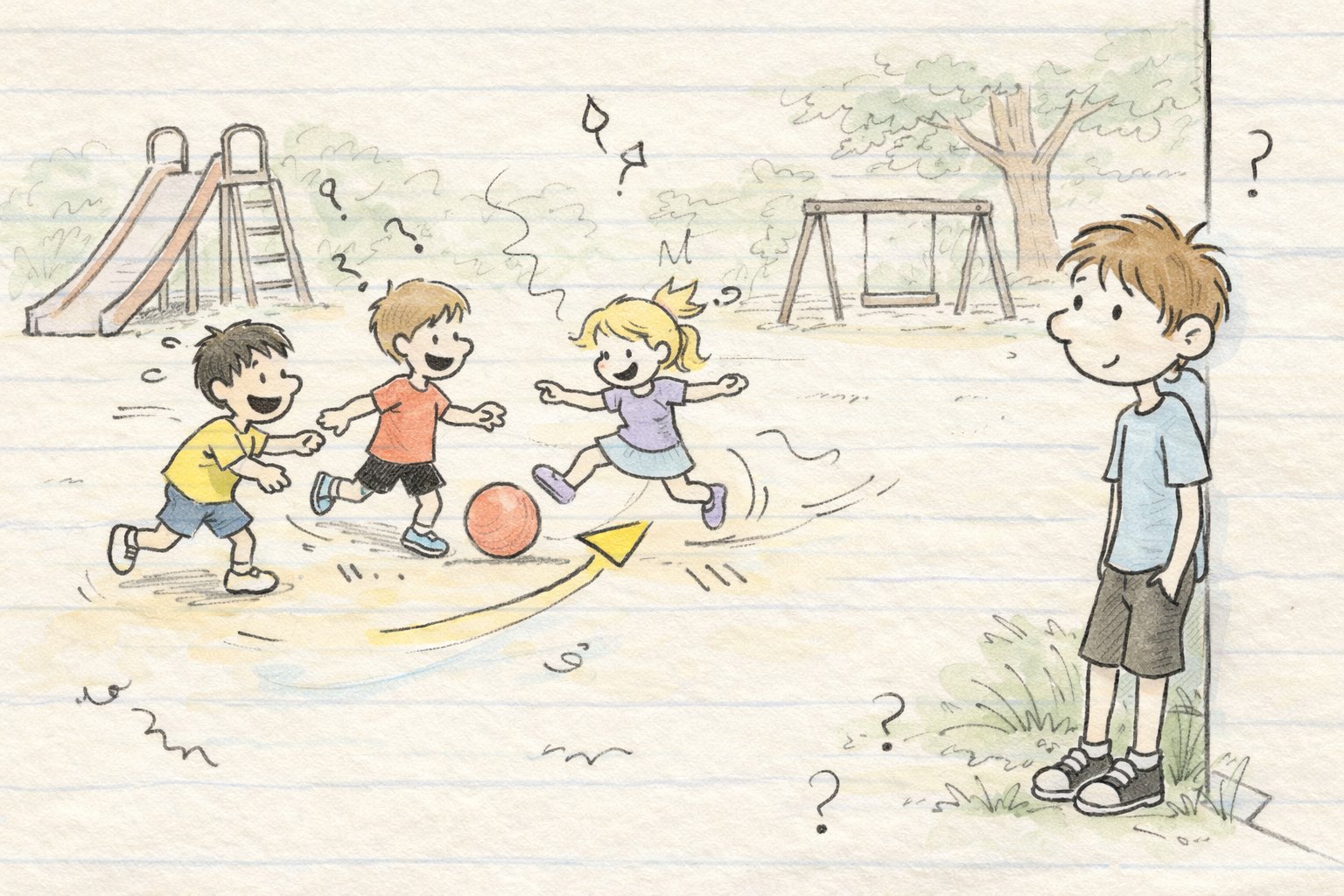
You know the exact look. Your child climbs into the backseat of the car after a long day at school.
Their shoulders are slumped down. Their eyes are fixed firmly on their shoes.
When you ask them about their day, they mumble a quiet answer. However, the truth eventually spills out in a rush of frustration.
They did not understand the math worksheet. Yet, they were simply too afraid to raise their hand in class.
The coach put them in the wrong position on the field. Consequently, they just nodded and quietly accepted it.
As a loving parent, your immediate instinct is to grab your phone. You desperately want to fire off a quick email and handle the conflict for them.
It is our deepest desire to protect our children from discomfort. We especially want to protect them when an intimidating adult is involved.
However, constantly swooping in deprives them of a crucial milestone. We accidentally rob them of the chance to discover their own powerful voice.
Self-advocacy is a remarkably complex virtue to master. It requires a child to push past their natural, ingrained intimidation toward authority figures.
From toddlerhood, they have been taught to follow directions and stay quiet. Now, we are asking them to politely disrupt that exact dynamic.
We are asking them to look a towering teacher in the eye and ask for help. This requires a profound level of internal confidence and a clear script.
Fortunately, you do not have to teach this with a boring lecture. Books are the ultimate rehearsal space for these intimidating moments.
Beautifully crafted stories provide a safe ground for your child to practice. Through these pages, they can borrow the exact words they need.
They will see that speaking up is never disrespectful. It is a necessary, brave act. Let us explore the stories that will help your child find their courage.
Sofia Valdez, Future Prez by Andrea Beaty
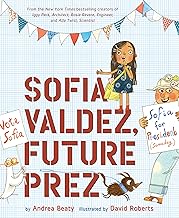
This book is a rhythmic, energetic masterpiece about community action. It completely dismantles the idea that children are too small to make a difference.
The artwork is bustling and incredibly inspiring. It perfectly captures the chaotic beauty of city life.
It tackles the specific intimidation of speaking to adults in power. Sofia marches right into City Hall to speak to the mayor.
What kids notice: Children immediately notice the dangerous mountain of trash. They love tracking Sofia’s confident march through the grand government building.
Story snapshot: Sofia decides a hazardous trash pile needs to become a park. She goes to City Hall to ask for help. The adult clerks dismiss her because she is just a kid. However, Sofia refuses to back down and passionately persuades the mayor.
Why this book helps: Children often believe that adults automatically know best.
This book helps by proving adults sometimes need a child’s perspective. It acts as a profound confidence booster when your child feels terrified. Furthermore, it models exactly how to stand tall and respectfully demand to be heard.
Red: A Crayon’s Story by Michael Hall
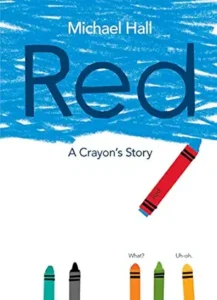
This clever book is a brilliant metaphor for identity. It uses the familiar shape of a crayon to tell a deeply emotional story.
It focuses heavily on the friction of adult expectations. It is a gentle story about finding the words to say who you truly are.
What kids notice: Kids are instantly in on the visual joke. They notice the crayon is drawing blue objects, even though his wrapper says red.
Story snapshot: A blue crayon is mistakenly wrapped in a red label. His teacher and parents try to help him be a better red crayon.
Nothing works, and he feels like a massive failure. Finally, a new friend asks him to draw a blue ocean, and he discovers his true voice.
Why this book helps: Self-advocacy is not just about asking for help with math.
Often, it is about having the courage to correct a misunderstanding. This book shows that well-meaning adults can make mistakes. Ultimately, it provides the quiet script needed to say who you actually are.
Kamala and Maya’s Big Idea by Meena Harris
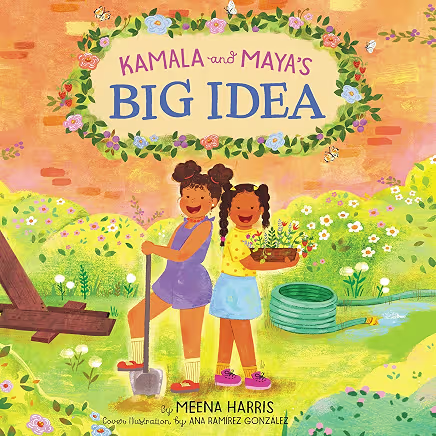
Based on a true story, this book is a sunny exploration of perseverance. It perfectly captures the boundless energy of two determined sisters.
The tone is encouraging, bright, and deeply grounded in reality.
It specifically deals with the frustration of being told “no” by an adult.
What kids notice: Children love the beautiful transformation of the empty courtyard. They also keenly notice the grumpy landlord who keeps shutting the girls down.
Story snapshot: Two sisters decide their apartment courtyard needs a playground. They excitedly take their big idea to the adult landlord. He flatly tells them no. Instead of giving up, the girls write a petition and persistently present their case.
Why this book helps: When a child hears a “no,” their instinct is to retreat. This book helps by completely redefining that word. It teaches your child that an adult’s initial refusal is not the end. Therefore, it shows them how to respectfully push back and fight for their needs.
The Day the Crayons Quit by Drew Daywalt
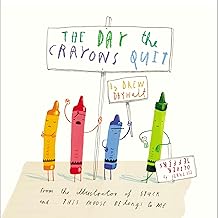
This book is an absolute riot from start to finish. It uses a hilarious format to explore workplace grievances from tired art supplies.
The handwriting is incredibly charming and universally relatable. Beneath the humor, it teaches a fantastic lesson about demanding better treatment.
What kids notice: Kids laugh hysterically at the visual gags. They especially love the naked peach crayon and the intense rivalry between yellow and orange.
Story snapshot: Duncan opens his crayon box to find a stack of angry letters. Every crayon has written to advocate for themselves. They clearly state their boundaries. They respectfully demand that Duncan change his coloring habits immediately.
Why this book helps: Speaking out loud to a towering adult can be utterly terrifying. This book helps by presenting a brilliant alternative. It teaches your child that they can always advocate for themselves with a pencil. Consequently, writing a letter becomes a brave, powerful tool for change.
Brave Every Day by Trudy Ludwig
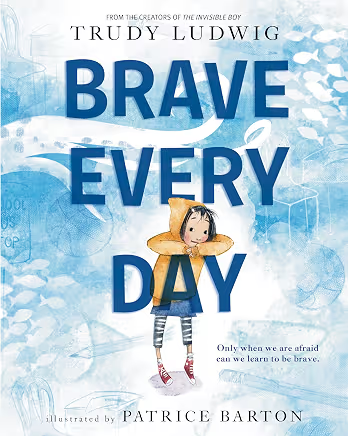
Trudy Ludwig is a genius at validating the emotional struggles of sensitive kids. This story tackles the paralyzing grip of anxiety with profound respect.
It explores the idea that finding your voice does not mean you are fearless. It means you are absolutely terrified, but you choose to speak up anyway.
What kids notice: Children are captivated by the visual representation of worry. They notice how the shadowy monster shrinks when Camila finds her courage.
Story snapshot: Camila is a chronic worrier who hides from everything. On a class field trip, the adult tour guide is walking far too fast. Camila’s classmate is terrified of getting lost. Seeing her friend in distress, Camila pushes past her anxiety and speaks up to the teacher.
Why this book helps: Sometimes, the easiest way to learn self-advocacy is by practicing on someone else.
This book shows that advocating for a friend requires the exact same muscles. It teaches them that bravery is a willingness to speak the truth even when scared. Ultimately, it gives them the script to ask an adult to slow down.
Speak Up, Molly Lou Melon by Patty Lovell
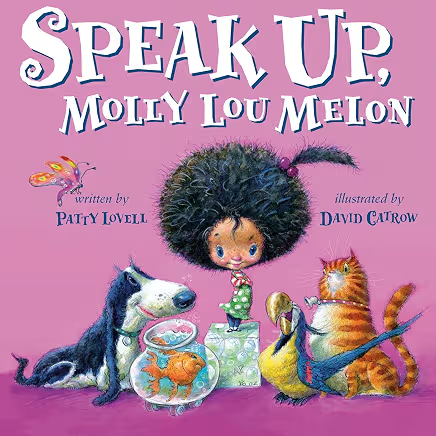
This is a vibrant, quirky continuation of a highly beloved series. Molly Lou is a tiny girl with a massive, booming voice.
She is the ultimate role model for a child who needs to turn up their volume. The illustrations are wildly expressive and incredibly punchy.
What kids notice: Kids love Molly Lou’s eccentric style and absolute fearlessness. They notice how she never shrinks herself down to make others comfortable.
Story snapshot: Molly Lou’s mother taught her to always speak up for what is right.
When a new boy starts teasing her friends, she does not wait for a teacher. She uses her big voice to confront the behavior directly. She advocates for her friends and reports the truth.
Why this book helps: Many children are implicitly taught that being good means being quiet. This book aggressively shatters that myth. It normalizes a loud, confident voice in young children. Furthermore, it builds the fierce internal fire needed to look an authority figure in the eye.
Malala’s Magic Pencil by Malala Yousafzai
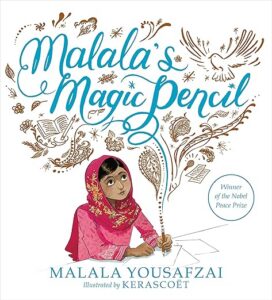
This is an awe-inspiring autobiographical story from a Nobel Peace Prize laureate. It handles heavy, real-world themes with incredible grace.
The artwork is breathtaking, blending reality with shimmering gold magic. It elevates the concept of finding your voice to a basic human right.
What kids notice: Children are mesmerized by the glowing gold illustrations. They are deeply struck by Malala’s bravery when she decides to write instead of hide.
Story snapshot: As a young girl, Malala wishes for a magic pencil to fix her world.
When adults say girls are no longer allowed to go to school, she refuses to stay quiet. She realizes her real voice is magic. She writes for the world to read and fiercely advocates for education.
Why this book helps: When a child is afraid to ask a teacher a question, their fear feels insurmountable. This book helps by providing massive, global perspective. It shows your child that other children have used their voices to change the world. Ultimately, it empowers them to confidently advocate for their own daily needs.
Just Ask!: Be Different, Be Brave, Be You by Sonia Sotomayor
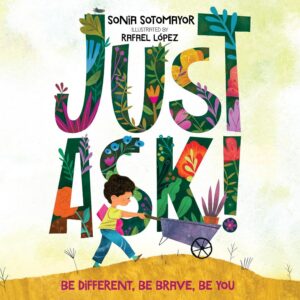
This book is an incredibly warm, inclusive guide to navigating differences. It is structured like a beautiful garden where every child is unique.
The tone is deeply reassuring and completely free of shame. It tackles the specific self-advocacy required when a child needs an accommodation.
What kids notice: Kids are fascinated by the wide variety of tools the children use. They love exploring the vibrant, detailed community garden setting.
Story snapshot: Various children introduce their unique physical or neurological differences. They talk openly about asthma, autism, and dyslexia. They confidently explain what they need to succeed. They encourage the reader to simply “just ask” adults if they need help.
Why this book helps: Children who need accommodations often feel a deep sense of shame.
This book helps by entirely normalizing the act of asking. It teaches your child that advocating for their educational needs is natural. Therefore, it provides the exact script they need to request a tool from a teacher.
Put Your Child in the Heart of the Story
Books are truly incredible teachers for growing minds. However, reading a beautiful story with your own name printed on the pages is pure magic.
Therefore, Scrively helps you create 100% custom children’s books easily. You can build a vibrant story where your child is the brave protagonist.
They can practice raising their hand and speaking up right on the page. Ultimately, this places them at the very heart of their own emotional growth.
Navigating the complex power dynamics between children and adults is a massive hurdle. You will inevitably face moments when your child completely freezes up.
However, every single one of those hesitant moments is a profound chance to learn. By reading these stories, you give your child the right words.
Most importantly, you teach them that true respect does not mean staying silent. Finally, they will learn to navigate the world with a deep, unshakeable confidence.