When Your Child Is Sure They Have All the Answers: 8 Stories to Help Them Choose Curiosity Over Certainty
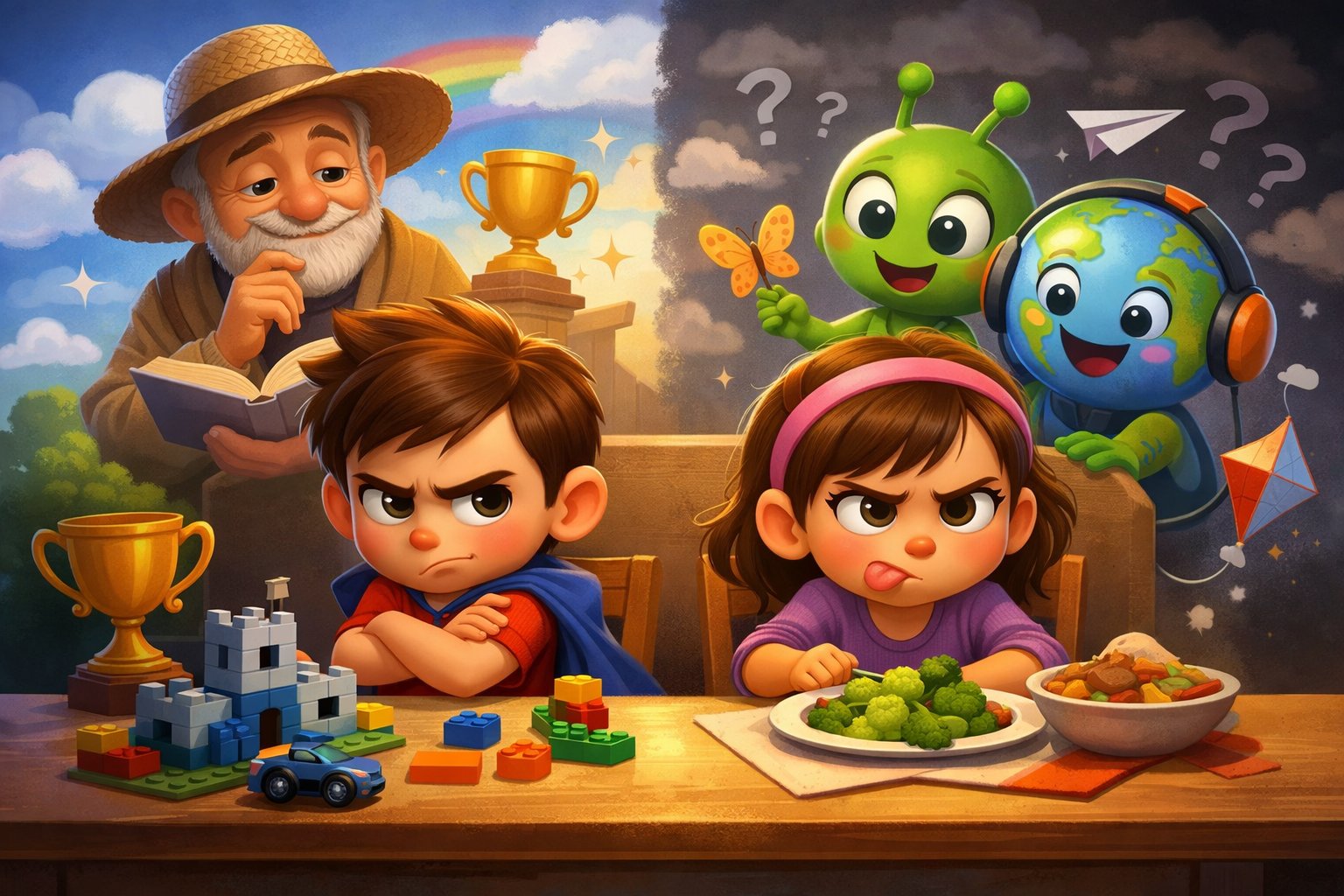
You’ve likely seen it happen at the kitchen table or during a playdate: that moment where your child is absolutely certain their way is the only way.
Maybe they’ve declared themselves the “undisputed master of Legos,” or perhaps they’ve decided, without a single taste, that the new dinner recipe is “definitely yucky.”
It’s a natural phase, but it’s also the perfect moment to start planting the seeds of humility and open-mindedness.
Humility isn’t about making yourself small or diminishing your talents. It’s actually a form of quiet confidence.
It’s the ability to say, “I’m good at this, but I can still learn from you.” For a young child, this is a sophisticated developmental leap.
It requires them to step outside their own ego and recognize the value in others’ perspectives and experiences.
Open-mindedness is the companion to that humility. It’s the willingness to try the “weird” fruit at the grocery store or to listen to a friend’s idea for a game that sounds different from their own.
It’s choosing curiosity over judgment. When we help our kids develop these traits, we aren’t just teaching them manners; we are giving them the tools to build deeper friendships and become lifelong learners.
Books serve as a beautiful, low-stakes “rehearsal space” for these big concepts. Through stories, your child can watch a character navigate the sting of a mistake or the surprise of discovering something new.
They get to practice these emotional responses from the safety of your lap before they have to apply them in the heat of a playground disagreement.
The Girl Who Never Made Mistakes — Mark Pett and Gary Rubinstein
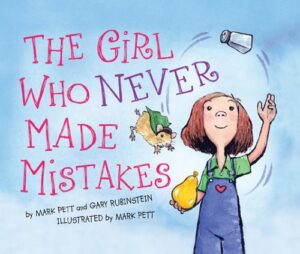
Beatrice Bottomwell is a local celebrity because she has never, ever made a mistake. She wins the talent show every year and never wears mismatched socks.
But the pressure of perfection is heavy, and eventually, the inevitable happens.
When Beatrice finally slips up in front of everyone, she discovers something transformative: life is actually much more fun when you aren’t worried about being the best.
This story is a masterclass in humility for children who feel the weight of perfectionism. It reframes a mistake not as a failure, but as a moment of connection.
When Beatrice laughs at her own blunder, she invites everyone else to join in the joy of being human rather than the coldness of being perfect.
What kids notice in this story:
They often point out how tense Beatrice looks at the beginning and how much wider her smile is once she finally messes up. They recognize that “perfect” looks exhausting.
Story snapshot:
Beatrice is famous for her mistake-free life until a public mishap during a talent show changes everything. Instead of crumbling, she learns to laugh and enjoy the messy side of life.
Why this book helps:
It teaches kids that humility means accepting our flaws with grace and that being “the best” is less important than being able to enjoy the journey.
The Sour Grape — Jory John
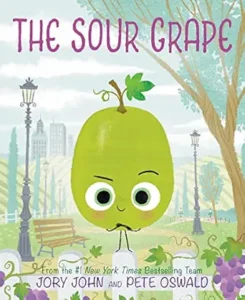
The Sour Grape is a character who holds a grudge like it’s a prize. He remembers every slight, every missed birthday invitation, and every accidental bump on the sidewalk.
He’s convinced he’s right and everyone else is wrong—until he realizes that he’s missed out on a lot of sweetness by staying so sour and closed-off to others’ intentions.
This book uses humor to show how a lack of open-mindedness and humility can lead to loneliness.
By seeing the Grape realize his own mistakes, children understand that everyone—even them—can be a bit “sour” sometimes. The path back to “sweetness” involves admitting we might have overreacted and being willing to forgive.
What kids notice in this story:
Children usually find the Grape’s “grudge list” hilarious but also recognize how unhappy it makes him. They see that being right all the time is a very lonely way to live.
Story snapshot:
A grape who believes he has been wronged by everyone becomes bitter and lonely. After a realization about his own behavior, he learns the value of forgiveness and a fresh perspective.
Why this book helps:
It encourages kids to stay open to the idea that others might not be “out to get them” and that admitting a mistake is the first step toward better friendships.
Beautiful Oops! — Barney Saltzberg
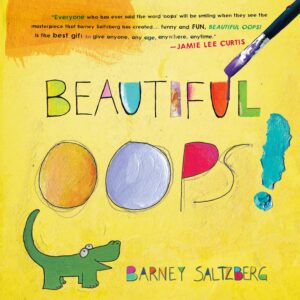
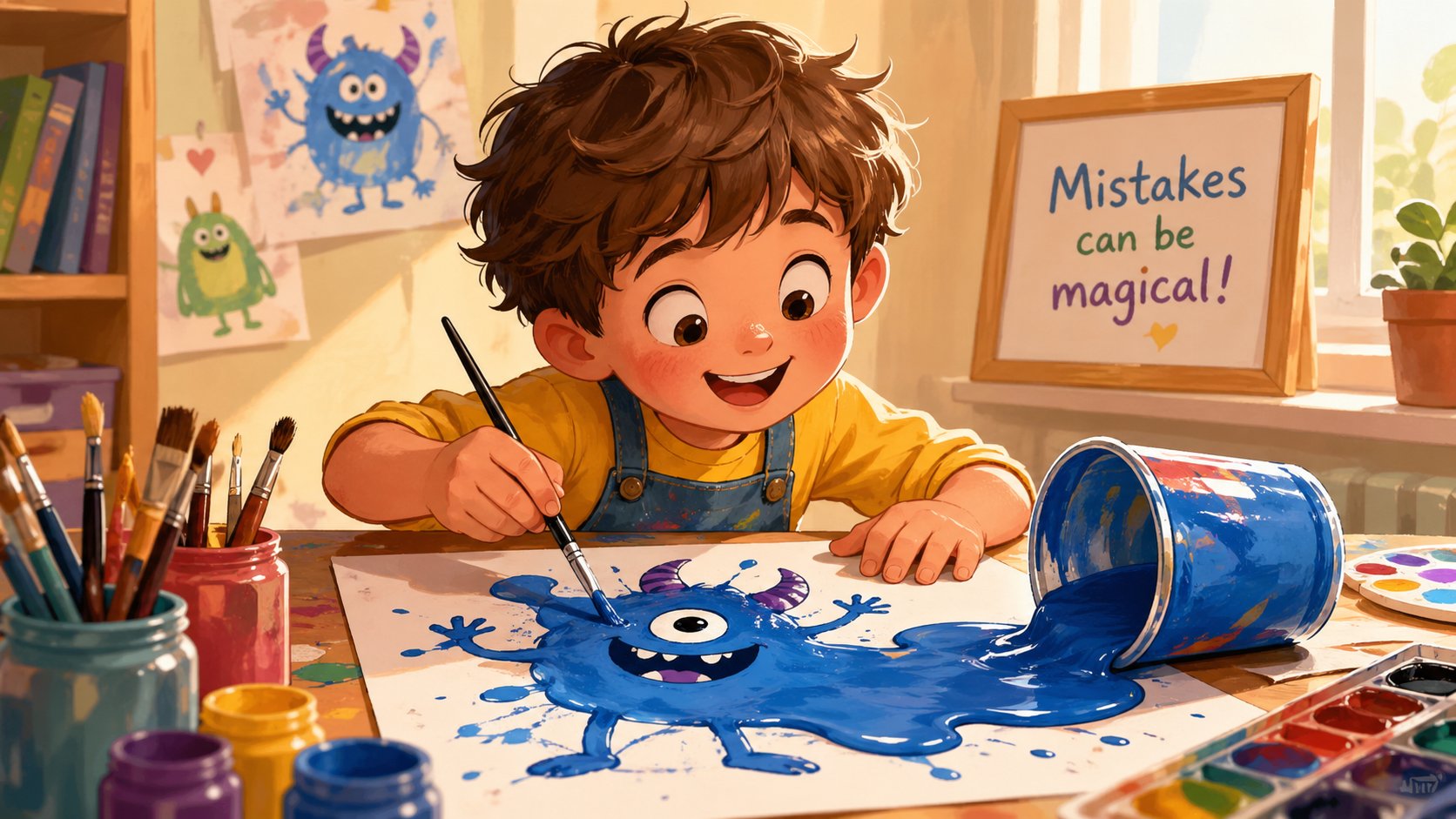
This isn’t just a book; it’s an interactive experience that turns “mistakes” into art. A tear in a page becomes the mouth of an alligator; a spill of paint becomes the fur of a dog. It’s a literal demonstration of how an open mind can take something “wrong” and turn it into something unexpected and beautiful.
For a child who gets frustrated when their drawing isn’t perfect, this book is a revelation. It teaches the humility to accept that things won’t always go as planned and the open-mindedness to see a new path forward. It’s about pivoting with creativity rather than shutting down in frustration.
What kids notice in this story:
They love the flaps and the physical transformation of the “messes.” They often start looking for “oopsies” in their own art supplies after reading.
Story snapshot:
Through clever paper engineering, this book shows how every smudge, tear, or spill can be transformed into a piece of creative art if you look at it differently.
Why this book helps:
It builds resilience and open-mindedness by showing that an unplanned result isn’t a disaster—it’s an opportunity for a “beautiful oops.”
The Sandwich Swap — Queen Rania of Al Abdullah
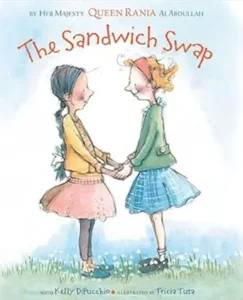
Lily and Salma are best friends who do everything together. But one day, a comment about their “weird” lunches—a peanut butter and jelly sandwich versus a hummus pita—spirals into a school-wide food fight.
The story follows their journey as they realize that their friendship is more important than their food preferences and that “different” doesn’t mean “bad.”
This is a foundational book for teaching open-mindedness regarding different cultures and habits. It shows how easily judgment can replace curiosity and how much we miss out on when we refuse to try something new. The resolution involves the humility to apologize and the courage to take that first “weird” bite.
What kids notice in this story:
Kids are often surprised by how a small comment about a sandwich can turn into such a big fight. they notice how much happier the girls are when they finally share their food.
Story snapshot:
Two best friends fall out over their different lunches, but they eventually decide to swap sandwiches and discover they both like something new.
Why this book helps:
It teaches children to approach differences with curiosity rather than judgment, fostering a sense of global open-mindedness and cultural humility.
Duck! Rabbit! — Amy Krouse Rosenthal
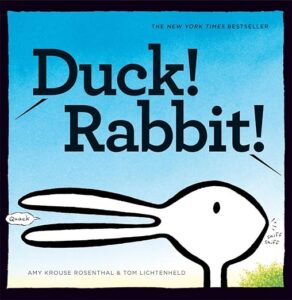
This clever book is based on the famous visual illusion.
On every page, two off-screen voices argue about whether the creature they see is a duck or a rabbit.
Depending on how you look at the ears (or the beak), both characters are technically right. It’s a fun, fast-paced way to show that two people can see the exact same thing in totally different ways.
It’s a perfect introduction to perspective-taking. It teaches kids that being “right” depends on your point of view and that someone else’s perspective is just as valid as theirs. This is the very heart of open-mindedness: the ability to hold two possibilities in your head at once.
What kids notice in this story:
Children love to “pick a side” and then quickly switch when they see the other animal. They realize that their eyes can play tricks on them and that their friends might see something they missed.
Story snapshot:
An argument unfolds over whether an illustrated animal is a duck or a rabbit. In the end, both perspectives are shown to be valid, leaving the reader to decide.
Why this book helps:
It simplifies the complex idea of multiple perspectives, teaching kids to respect others’ viewpoints even when they disagree.
A Whale of a Mistake — Ioana Hobai
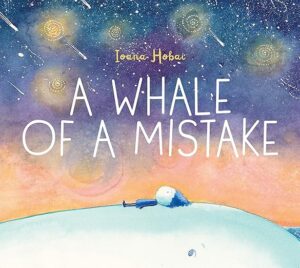
When a young girl makes a mistake, it feels massive—like a giant blue whale following her around.
It’s heavy, it’s embarrassing, and it feels impossible to hide. But as she learns to sit with the “whale” and eventually let it go, she realizes that everyone has their own whales and that making mistakes is just part of being alive.
This book uses beautiful imagery to tackle the shame that often accompanies a lack of humility. True humility allows us to acknowledge our mistakes without being crushed by them. By visualizing the mistake as a whale, kids can learn to see their errors as something separate from their identity.
What kids notice in this story:
They resonate with the feeling of a mistake “following” you. They notice that the whale gets smaller or less scary when the character stops trying to run away from it.
Story snapshot:
A girl deals with the overwhelming feeling of a large mistake, personified as a whale, until she learns to accept it and finds peace under the stars.
Why this book helps:
It encourages emotional humility by teaching kids that acknowledging an error is the only way to stop it from feeling so heavy.
I Can’t Do That, Yet — Esther Pia Cordova
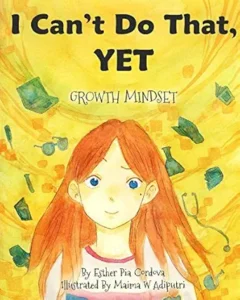
Enna is a girl who gets easily frustrated when she can’t master a new skill immediately.
She often says, “I can’t do that.” But with the help of a dream and a little guidance, she learns to add one powerful word to the end of that sentence: yet.
This shift in mindset requires the humility to be a beginner and the open-mindedness to see her own future potential.
This story is essential for building a growth mindset. It teaches children that they don’t have to be experts right away. Humility is knowing you have room to grow, and open-mindedness is being willing to put in the work to get there. It takes the pressure off “being the best” and puts the focus on “getting better.”
What kids notice in this story:
Kids relate to Enna’s frustration. They often start using the word “yet” in their own lives after seeing how it changes Enna’s attitude toward her challenges.
Story snapshot:
A young girl moves from frustration to confidence by learning that skills are developed over time and that “not knowing” is just the first step of learning.
Why this book helps:
It fosters intellectual humility by reminding children that everyone starts as a beginner and that learning is a lifelong process.
Most Marshmallows — Rowboat Watkins
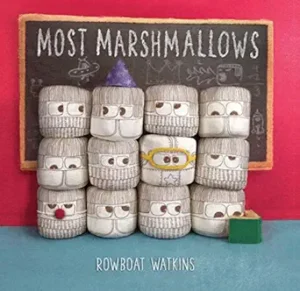
Most marshmallows do “marshmallowy” things: they stay in their bags, they watch TV, and they dream of becoming s’mores.
But some marshmallows are different.
They practice the accordion, they learn to fly, and they see the world in their own unique way. It’s a quirky, hilarious look at why it’s important to stay open to your own unconventional ideas.
While much of open-mindedness is about how we see others, this book focuses on being open-minded about ourselves.
It encourages kids to be humble enough to ignore the “bag” and brave enough to be different. It’s a celebration of the unique sparks that make us who we are.
What kids notice in this story:
They find the images of marshmallows doing everyday things—like sitting on a couch—absolutely hilarious. They love the idea that a marshmallow could be a secret adventurer.
Story snapshot:
This book contrasts the “normal” life of most marshmallows with the extraordinary possibilities available to those who think outside the bag.
Why this book helps:
It encourages kids to maintain an open mind about their own potential and the potential of those around them, breaking through social expectations.
Practice Big Skills with Scrively
At Scrively, we believe that the best way to learn these big life lessons is by living them.
While reading about characters is a wonderful start, our personalized stories allow your child to literally step into the narrative.
By seeing themselves navigate a “beautiful oops” or practice the power of “yet,” they build the neural pathways of humility and open-mindedness in a way that feels personal and permanent.
When your child is the hero of the story, the lesson isn’t just something they hear—it’s something they become.
Teaching humility and open-mindedness isn’t a one-time conversation; it’s a series of small, gentle shifts in perspective.
By filling your bookshelf with stories that celebrate the “oops,” the “yet,” and the “different,” you’re giving your child a map to navigate a world that is much bigger—and much more interesting—than they ever imagined. It’s a journey you get to take together, one page at a time.