Best Books for 5-Year-Olds Who Struggle With Drop-Offs and Goodbyes
You know the moment. You’re at the classroom door, the daycare gate, the gym lobby, the church classroom, the carpool line.
Nothing about the routine is new. But your five-year-old suddenly looks at you like you’re the only safe thing in the building.
Sometimes it’s tears. Sometimes it’s stalling. Sometimes it’s a whispery “Don’t go,” that lands right in your ribs.
This can feel confusing at five because your child is so capable in a lot of ways.
They can talk through ideas, follow directions, and tell you what they want. But emotionally, they’re still learning how to hold two truths at once: you can leave, and you will come back.
Separation anxiety at this age often shows up during transitions—drop-offs, new activities, unfamiliar caregivers, even short goodbyes that adults barely notice. It’s not a character flaw.
It’s a nervous system asking for predictability.
The right books help because they let your child rehearse separation in a low-stakes way. Stories slow the moment down.
They give feelings a name. They show reunion as reliable. And they give you language you can borrow on the way out the door.
Books That Help With Separation, Transitions, and Reassurance

The Kissing Hand — Audrey Penn
Core Themes:
- Reassurance your child can carry
- Simple goodbye rituals
- Feeling connected while apart
Story Snapshot:
A young raccoon feels nervous about leaving his mother to go to school. Before they part, she creates a small ritual—a kiss placed on his hand—so he can “carry” her love with him throughout the day.
Why this book works well for separation anxiety at age five:
Five-year-olds often need reassurance they can hold onto, not just words they’re told to remember. This book turns comfort into something physical and repeatable, which makes it easier for a child to access when their body starts to feel wobbly.
It’s also practical. You can use the ritual at drop-off without stretching the goodbye into a long, emotional negotiation.
A quick hand kiss, a steady smile, a confident exit—then your child has a “tool” they can use in the classroom, on the playground, or during the next transition.
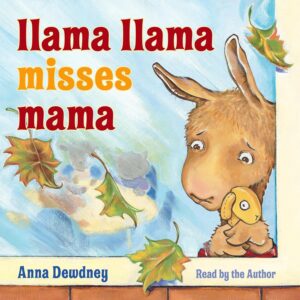
Llama Llama Misses Mama — Anna Dewdney
Core Themes:
- Drop-off emotions that spike fast
- Regulating through routine
- Reassurance without rushing
Story Snapshot:
Llama starts his school day excited—but once Mama leaves, the classroom suddenly feels loud, unfamiliar, and overwhelming.
With gentle support from his teacher and the comfort of routine, Llama slowly settles in and reconnects with a sense of safety.
Why this book works well for separation anxiety at age five:
Many five-year-olds don’t struggle all day—they struggle at the exact moment of separation. This book captures that emotional spike without shaming it and without turning it into a “be brave” speech.
What’s calming here is the arc: hard beginning, steadier middle, reunion at the end.
For kids who melt down at drop-off but end up okay once they’re engaged, this story normalizes the experience and quietly teaches: your feelings can change, and the day can still be good.
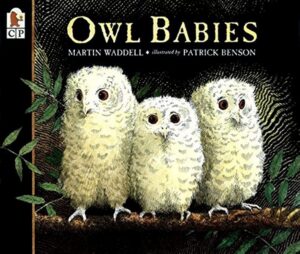
Owl Babies — Martin Waddell
Core Themes:
- The hard part: waiting
- Trusting a caregiver’s return
- Managing “what if” thoughts
Story Snapshot:
Three baby owls wake up and discover their mother is gone. They wait together, worry together, imagine together—and then she comes back.
Why this book works well for separation anxiety at age five:
This book doesn’t try to talk kids out of worry. It simply stays with them in the waiting—because that’s often where anxiety lives.
Five-year-olds can handle the truth that separation feels uncomfortable; what they need is the repeated proof that reunion is reliable.
Read it slowly and let the pauses do some work. Your child gets to practice: “I can feel worried, and I can still be safe.” And then the return lands like a deep exhale.
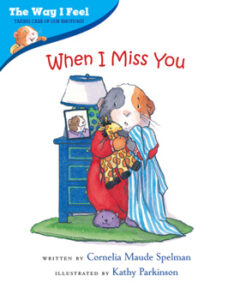
When I Miss You — Cornelia Maude Spelman
Core Themes:
- Naming the feeling of missing
- Gentle coping strategies
- Normalizing short separations
Story Snapshot:
This book names what missing someone can feel like—sad, lonely, uncertain—and offers simple, child-friendly ways to cope until you’re together again.
Why this book works well for separation anxiety at age five:
Some kids don’t have words for what’s happening inside them. They just feel “bad” and react.
This book gives that feeling a name—and that alone can reduce intensity. When your child can say, “I miss you,” the moment becomes easier to meet with calm confidence.
It also gives you language to mirror: “Yes, you miss me. And you can handle missing me.
I’ll be back.” That combination—validation plus certainty—builds emotional stamina over time.
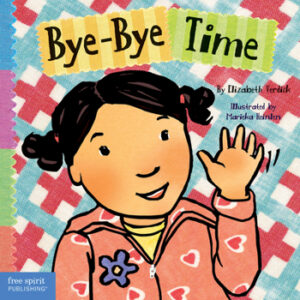
Goodbye Time — Elizabeth Verdick
Core Themes:
- Predictable goodbyes
- Short separations as normal
- Confidence through routine
Story Snapshot:
Through familiar everyday scenarios, this book shows children that goodbyes happen—and reunions follow. The tone is steady, not sugary, which makes it feel believable.
Why this book works well for separation anxiety at age five:
Five-year-olds love patterns when their nervous system feels uncertain.
This book reinforces the pattern in the simplest way: goodbye → time apart → return. It doesn’t overexplain; it repeats what matters.
If your child struggles most when transitions feel sudden, this book supports a consistent “goodbye plan”: a short ritual, a clear timeline (“after snack,” “after art,” “after pickup”), and a confident exit.
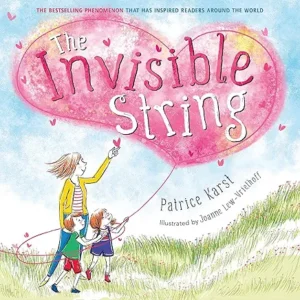
The Invisible String — Patrice Karst
Core Themes:
- Connection across distance
- Comforting metaphors for kids
- Reassurance during transitions
Story Snapshot:
This story teaches that people who love each other are always connected by an invisible string—no matter where they are or how far apart they feel.
Why this book works well for separation anxiety at age five:
Five-year-olds often respond deeply to imagery.
The “invisible string” gives them something to picture in those moments when they can’t see you and their brain starts to spiral. It replaces “What if I’m alone?” with “We’re still connected.”
It can also become a quick drop-off tool: “Want to tug our string once before I go?” That tiny ritual can feel grounding without turning the goodbye into a long scene.
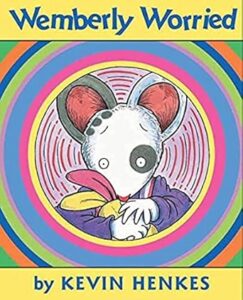
Wemberly Worried — Kevin Henkes
Core Themes:
- Worry that shows up early
- Starting school and new routines
- Confidence that grows over time
Story Snapshot:
Wemberly worries about everything—big and small—and starting school adds a whole new category of worries. As the story unfolds, connection and experience help those worries shrink.
Why this book works well for separation anxiety at age five:
This one is for the kids who worry before the goodbye. If your child starts asking questions the night before—“What if I miss you?” “What if I need you?”—Wemberly will feel instantly familiar.
The book models something realistic: worry doesn’t disappear because someone says “It’ll be fine.”
It softens as kids gather evidence—friendly faces, predictable routines, successful days. That’s a powerful message for a child who needs more than pep talks.
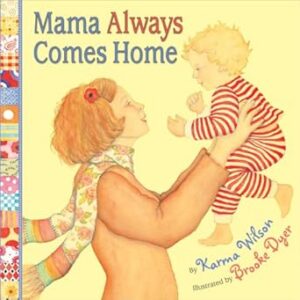
My Mama Comes Back — Karma Wilson
Core Themes:
- Reassurance through repetition
- Trusting the return
- Calm, steady rhythms
Story Snapshot:
In rhythmic, predictable language, this book repeats a comforting truth: caregivers leave, and they come back—again and again.
Why this book works well for separation anxiety at age five:
When kids are anxious, their brains crave certainty. This book gives it in the most regulation-friendly way possible: repetition, rhythm, and simple promises that don’t wobble.
It’s especially helpful on mornings when your child seems “pre-upset.”
Reading it before school can prime their nervous system with the pattern you want them to trust: separation is temporary, and return is dependable.
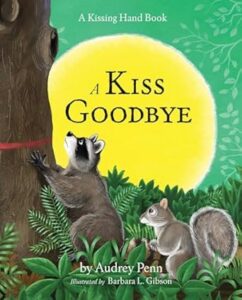
A Kiss Goodbye — Audrey Penn
Core Themes:
- Goodbye rituals across situations
- Emotional continuity during change
- Comfort when routines shift
Story Snapshot:
This story broadens the idea of reassurance by showing different kinds of goodbyes and reunions, reinforcing that love stays steady even when circumstances change.
Why this book works well for separation anxiety at age five:
Some kids don’t just struggle with one drop-off—they struggle when life has a lot of transitions stacked at once.
This book helps normalize the bigger picture: separations happen in different forms, and reunion still follows.
It also supports your “steady parent” script: short goodbye, confident tone, clear return. When kids sense your certainty, their bodies often calm faster—even if their feelings are still loud.
A Little Bonus: How to Make These Stories Stick in Real Life
Read when your child is calm. These books work best as practice, not as emergency medicine. Bedtime, after dinner, or a quiet afternoon is ideal.
Borrow the language at the doorway. A simple callback—“Want your Kissing Hand?” “Let’s tug our invisible string”—is faster and more effective than a long explanation when time is tight.
Keep the goodbye short and consistent. Lengthy goodbyes can accidentally teach your child that separation is dangerous. A predictable routine teaches the opposite: “This is normal, and you can do it.”
Give a clear return point. “After snack,” “after art,” or “when the big hand is on the 12” works better than vague promises. Five-year-olds love a timeline they can hold.
If your child loves stories, there’s another powerful step: let them create one where they are the character who handles the goodbye, settles in, and reunites at the end.
Scrively is a space where kids can create personalized stories that mirror real life—drop-offs, brave moments, and all—so they can practice confidence on the page and carry it into the day.