Best Books to Help Kids Learn Patience
Patience doesn’t come naturally to most kids—and that’s not a flaw. It’s a feature of growing brains that are still learning how to manage time, emotions, impulses, and expectations.
Waiting feels big when you’re small. Five minutes can feel like forever. A turn that hasn’t arrived yet can feel deeply unfair.
And the desire for something right now often shows up before the skills needed to pause, breathe, and trust that good things are coming.
For adults, it can be tempting to label impatience as misbehavior or defiance.
But developmentally, impatience is often a sign that a child is still learning self-regulation, emotional flexibility, and frustration tolerance. These skills don’t snap into place overnight.
They grow slowly—through repetition, modeling, and gentle guidance.
That’s where stories shine. Books allow children to experience waiting, effort, and persistence from a safe distance.
They watch characters struggle, stall, fail, try again, and eventually grow. Without being told what to do, kids absorb the message that waiting is part of life—and that feelings like frustration, boredom, and longing are survivable.
Reading about patience also helps kids build language around the experience.
When a character names their feelings or finds a way to cope while waiting, children begin to recognize those same moments in themselves. Stories create emotional mirrors that say, “You’re not the only one who finds this hard.”
Below is a thoughtfully curated list of children’s books that approach patience with warmth and realism. These stories don’t demand perfection.
They honor effort. They show kids that patience is a practice—one that grows stronger in small, everyday moments.
Waiting Is a Skill Worth Growing
Learning patience isn’t about suppressing feelings or forcing kids to “be good.” It’s about helping them notice their feelings, tolerate discomfort, and stay engaged even when things take time.
The books below explore these ideas through relatable situations—waiting for turns, working toward goals, dealing with disappointment, and slowing down in a fast-paced world.
Each story offers something slightly different, because patience itself has many forms.
Sometimes it’s waiting quietly. Sometimes it’s trying again after failing. Sometimes it’s letting time do its work.

Waiting Is Not Easy! — Mo Willems
Core Themes:
• Anticipation and uncertainty
• Friendship and trust
• Emotional regulation
Story Snapshot:
Gerald the Elephant struggles to wait for a surprise his friend Piggie promises. The waiting feels unbearable, confusing, and frustrating—until the surprise finally arrives.
How this book helps kids learn patience:
This story validates how hard waiting can feel while modeling that discomfort doesn’t last forever. Kids see that anticipation is emotional work—and that sticking with it can lead to joy.
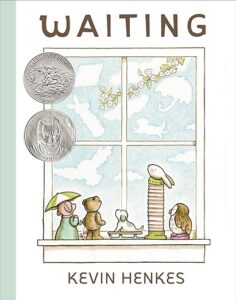
Waiting — Kevin Henkes
Core Themes:
• Anticipation and delayed gratification
• Managing uncertainty
• Emotional awareness during waiting
Story Snapshot:
Five toys sit on a windowsill, each waiting for something different—wind, stars, mail, or a chance to shine. As time passes, small moments unfold, teaching that waiting is rarely empty and often full of quiet surprises.
How this book helps kids learn patience:
This gentle, minimalist story shows children that waiting doesn’t have to feel tense or frustrating.
Instead, it reframes waiting as an active experience—one where noticing, imagining, and staying present can turn patience into something calm and meaningful.

The Dot — Peter H. Reynolds
Core Themes:
• Persistence
• Creative confidence
• Growth mindset
Story Snapshot:
A child who believes she can’t draw discovers that starting small—and sticking with it—can lead to unexpected growth.
How this book helps kids learn patience:
The story emphasizes effort over outcome, helping kids learn that progress unfolds gradually through trying again.
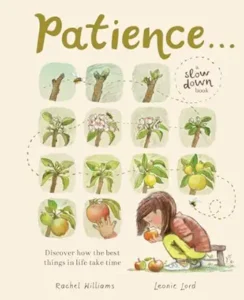
Slow Down — Rachel Williams
Core Themes:
• Mindfulness
• Observation
• Slowing the pace
Story Snapshot:
Children are invited to notice small details in the natural world by slowing down and paying attention.
How this book helps kids learn patience:
By encouraging observation over action, this book teaches that stillness and waiting can be rich and rewarding.

The Most Magnificent Thing — Ashley Spires
Core Themes:
• Persistence through frustration
• Emotional regulation
• Trying again after failure
Story Snapshot:
A determined young girl sets out to make the “most magnificent thing.” When her project doesn’t turn out as planned, she grows increasingly frustrated—until stepping away helps her return with fresh perspective and renewed patience.
How this book helps kids learn patience:
This story shows that patience isn’t about getting things right immediately—it’s about recognizing frustration, pausing when emotions run high, and coming back with clarity.
Kids learn that taking breaks and trying again are powerful tools, not signs of failure.

Ish — Peter H. Reynolds
Core Themes:
• Letting go of perfection
• Emotional flexibility
• Patience with self and process
Story Snapshot:
Ramon loves to draw—until one small criticism makes him believe his work isn’t “good enough.”
Discouraged, he stops creating altogether. With gentle encouragement from his sister, Ramon begins to see that drawings don’t have to be perfect to be meaningful—they can be ish.
How this book helps kids learn patience:
This story teaches children that growth takes time and that mistakes are part of learning.
By shifting focus from outcomes to exploration, Ish helps kids practice patience with themselves—especially when progress feels slow or messy.
Kids learn that waiting, practicing, and trying again aren’t failures. They’re how confidence quietly grows.
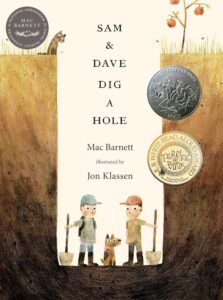
Sam and Dave Dig a Hole — Mac Barnett
Core Themes:
• Persistence without payoff
• Process over outcome
• Humor in effort
Story Snapshot:
Two friends dig tirelessly for something extraordinary, narrowly missing wonders along the way.
How this book helps kids learn patience:
The humor softens disappointment while showing that effort itself can be meaningful—even when results aren’t immediate.
Patience Grows in Small Moments
Patience isn’t mastered in one lesson or one book. It grows through small, supported moments—waiting for a turn, finishing a task, sitting with frustration, trying again tomorrow.
Stories help plant the seeds, but real growth happens through repetition, connection, and compassion.
When kids struggle with waiting, they aren’t failing. They’re practicing. Each pause strengthens their ability to regulate emotions and trust the process. Over time, those small practices add up.
Reading together, talking about characters’ feelings, and connecting stories to real-life moments can make patience feel less abstract and more attainable. And when kids create their own stories, they deepen that learning even more.
Scrively is a creative space where kids can write and illustrate their own stories—about waiting, trying again, working toward goals, or learning to slow down. Creating stories helps children process experiences and practice emotional skills in a way that feels empowering and fun.
You can explore Scrively here: https://www.scrively.com
With time, support, and gentle encouragement, patience becomes less of a struggle—and more of a strength kids carry with them as they grow.