Best Books for Kids Who Are Afraid of the Dark
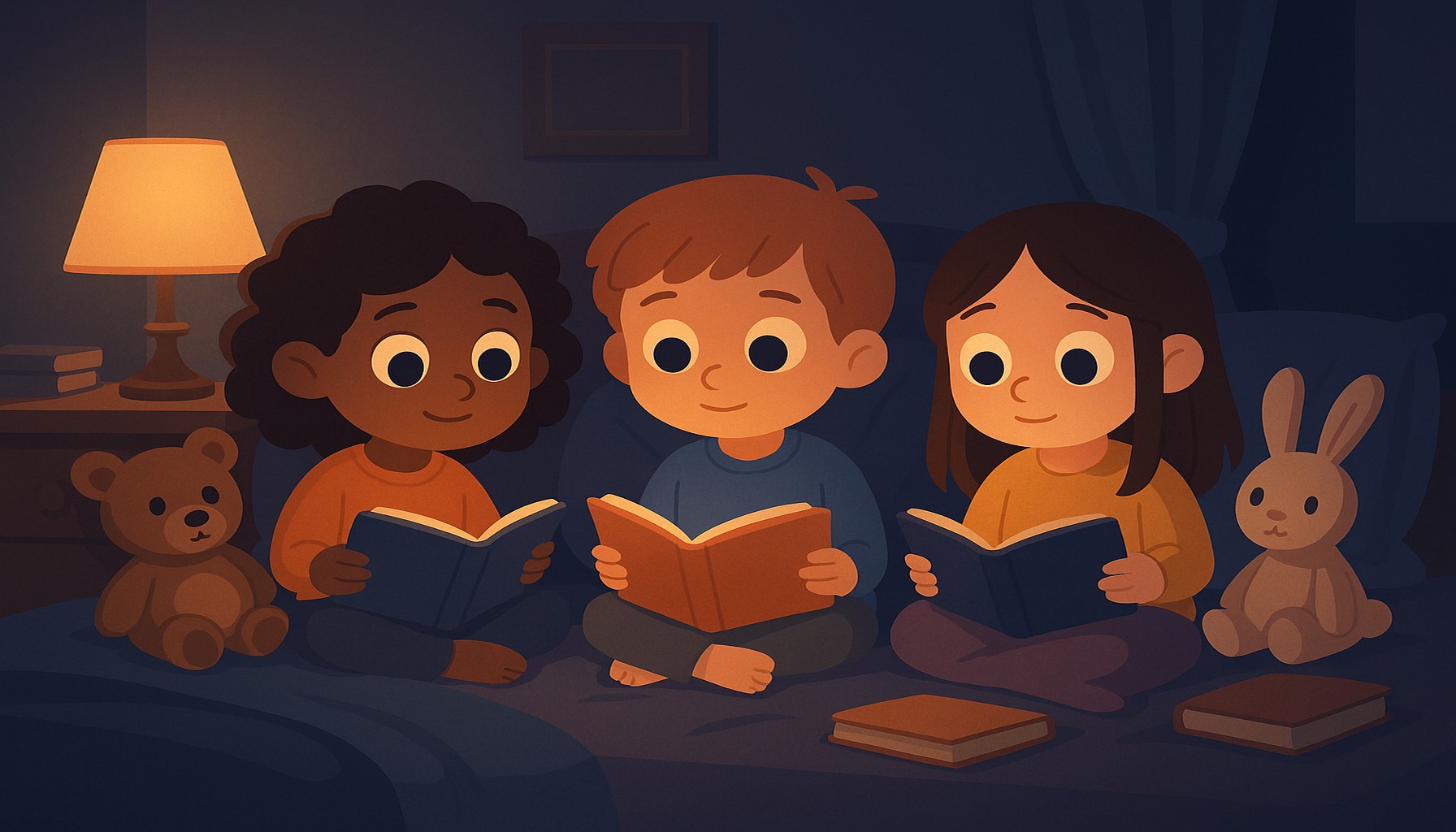
Fear of the dark is one of those childhood experiences that can feel huge at bedtime… and totally invisible by breakfast. In the daylight, your kid might be bold, funny, independent, and ready to conquer the world.
At night, the same kid may suddenly need an extra hug, a brighter night light, and a serious investigation into whether the closet door is “exactly the right amount” open.
If that’s your house, you’re not failing. You’re parenting a normal child with a powerful imagination.
Developmentally, fear of the dark makes sense.
Darkness removes visual information, and kids rely heavily on what they can see to feel oriented. When the lights go out, their brains try to fill in the blanks.
And because kids are learning to separate “possible” from “probable,” a shadow can become a creature, a coat on a chair can become a person, and a house settling can become a mysterious “something.”
It’s not irrational to them—it’s their mind doing its best to interpret the unknown.
Nighttime fears also tend to show up alongside growth. Kids may be gaining independence, learning new social dynamics, hearing new stories at school, or noticing bigger themes in life (like getting hurt, getting lost, or being alone).
Sometimes the fear isn’t really about the dark at all—it’s about uncertainty. The dark just happens to be the easiest place for uncertainty to gather.
Books can help in a gentle, steady way. A reassuring story gives kids a safe place to “practice” scary feelings without being overwhelmed.
It offers language for what they feel, models calm responses, and provides predictable structure: beginning, middle, end; fear, support, resolution.
And because reading is naturally relational (you + your child + the page), it builds connection at the exact moment your child most needs it.
Below are eight comforting children’s books that help kids feel safe at night—without turning bedtime into a spooky production.
These stories are warm, inclusive, and quietly brave. They don’t shame fear. They simply show kids that fear can be met with kindness, tools, and a little courage that grows over time.
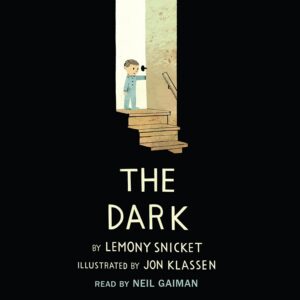
The Dark — Lemony Snicket
Core Themes: • Befriending fear instead of fighting it • Curiosity as a path to courage • The unknown becoming understandable
Story Snapshot: Laszlo is afraid of the dark that lives in his basement. One night, the dark invites him—quietly and gently—into the very place he’s been avoiding, guiding him step by step.
How this book helps kids feel safe at night: This story reframes darkness as something that can be approached and understood.
It helps kids feel brave without pretending fear is silly—showing that courage can look like taking one small step closer, with support.
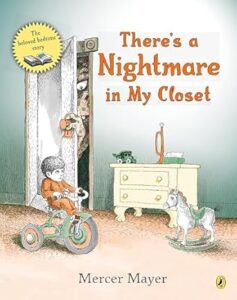
There’s a Nightmare in My Closet — Mercer Mayer
Core Themes: • Naming the fear out loud • Compassion and empathy • Taking gentle action
Story Snapshot: A child is sure there’s a nightmare hiding in the closet. When the child finally faces it, the “nightmare” turns out to be frightened too—and surprisingly in need of comfort.
How this book helps kids feel safe at night: It gives kids a simple emotional lesson: fear isn’t always the enemy—it can be a feeling that needs care.
The twist also reduces “monster power,” helping children feel more in control and less alone with big nighttime thoughts.
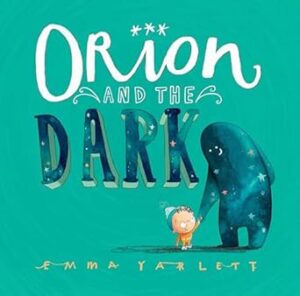
Orion and the Dark — Emma Yarlett
Core Themes: • Anxiety meeting reassurance • Learning through friendly exposure • Seeing the dark as a companion
Story Snapshot: Orion is afraid of the dark—until the Dark itself shows up for a personal visit. Together they take a nighttime tour, and Orion discovers that darkness isn’t only mysterious… it can also be calm and protective.
How this book helps kids feel safe at night: This book offers a clever “what if the dark is kind?” reframe, which can be incredibly soothing.
It normalizes worry while gently expanding a child’s interpretation of nighttime, moving from threat to neutrality (or even comfort).
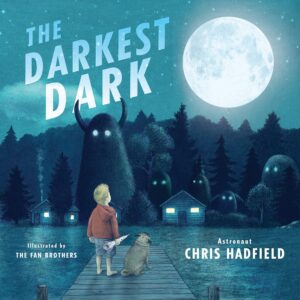
The Darkest Dark — Chris Hadfield
Core Themes: • Fear and bravery coexisting • Role models and resilience • Turning worry into wonder
Story Snapshot: Based on astronaut Chris Hadfield’s childhood, this story follows a boy who feels overwhelmed by the dark—until a life-changing experience helps him see the night sky with new eyes.
How this book helps kids feel safe at night: It reminds children that brave people can still feel fear—and that fear can change over time.
The story gently shifts focus from “what’s hiding in the dark” to “what’s beautiful in the dark,” which is a powerful bedtime transition.
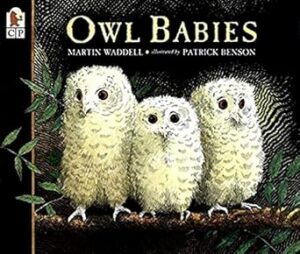
Owl Babies — Martin Waddell
Core Themes: • Separation anxiety and reassurance • Comfort through repetition • Trust and reunion
Story Snapshot: Three baby owls wake up and realize their mother is gone. As they wait, their worries grow—until they repeat the words that steady them: “Mummy will come back.”
How this book helps kids feel safe at night: Many “dark fears” are really “alone fears.” This book gives kids a calming script and shows how reassurance works: not by arguing with feelings, but by returning to a steady truth again and again.
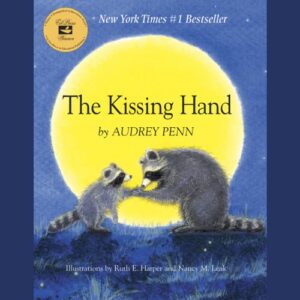
The Kissing Hand — Audrey Penn
Core Themes: • Connection that travels with you • Comfort rituals • Emotional security
Story Snapshot: Chester Raccoon feels nervous about being away from his mother. She creates a simple ritual—the kissing hand—so he can feel her love even when she isn’t right beside him.
How this book helps kids feel safe at night: Bedtime often amplifies separation feelings.
This story offers a practical, portable comfort tool that translates beautifully to nights: your child can “carry” your love into the dark through a small ritual that feels real and reliable.
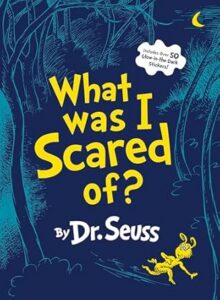
What Was I Scared Of? — Dr. Seuss
Core Themes: • Misunderstanding and perspective shifts • Humor as a fear-softener • Realizing “scary” can be harmless
Story Snapshot: A narrator repeatedly runs into a pair of pale green pants—with nobody inside them. Panic follows… until the story reveals a surprising truth about who is afraid of whom.
How this book helps kids feel safe at night: This book is a gentle lesson in misinterpretation: sometimes our brains fill in the worst-case story. It’s a playful way to show kids that fear can shrink when you pause, look again, and consider a kinder explanation.

Goodnight, Goodnight, Construction Site — Sherri Duskey Rinker
Core Themes: • Predictable routines that signal safety • Wind-down and rest • Cozy rhythm and reassurance
Story Snapshot: As day ends, the trucks and machines at a construction site finish their work and settle down one by one. The site becomes quieter and calmer as each vehicle follows its bedtime routine.
How this book helps kids feel safe at night: Anxious bedtime brains love predictability.
This book models a soothing, repeatable pattern: work ends, bodies rest, everything is okay. It’s especially helpful for kids who relax when bedtime feels structured and familiar.
Closing Thoughts: Gentle Bravery, One Night at a Time
If your child is afraid of the dark, the goal isn’t to force fear to disappear. The goal is to help your child feel supported while their confidence grows—slowly, naturally, in their own time. Think of bravery like a dimmer switch, not an on/off button. Some nights will feel easier. Other nights will need more softness. Both are normal.
Bedtime routines can become a quiet kind of safety net: a familiar order (bath, pajamas, book, lights), a few predictable comforts (night light, special blanket, calming music), and simple language that doesn’t argue with feelings.
You don’t have to convince your child that the dark is “nothing.” You can say, “I hear you. That feels scary. I’m here. Your room is safe.” Then return to the routine—steady, loving, and calm.
And remember: imagination is not the enemy. It’s a superpower. With the right stories, kids learn to use imagination as a tool for comfort instead of a factory for worry.
They learn to picture brave endings, friendly shadows, and safe rooms—until those pictures feel more believable than the scary ones.
If your child enjoys making up stories, you can gently invite them to become the storyteller, too.
When kids create their own characters and endings, they gain a sense of control and confidence—especially around bedtime themes. If you want a warm space where kids can write and create their own stories (including brave-at-night stories), you can explore Scrively.
Here’s the hopeful truth: nighttime confidence is built, not demanded. One comforting book. One steady routine. One brave little step at a time.