Best Books for Children Going Through a Divorce: Stories That Comfort, Heal, and Reassure
Divorce is one of the biggest transitions a child can face. Routines shift, houses may change, and kids often struggle to find words for the swirl of emotions inside them.
Even if parents reassure their children, kids often need additional ways to process what’s happening in their world.
That’s where stories come in.
The right books provide comfort, give children language for their feelings, and remind them that love and family still remain strong, even when things look different.
Books can become bridges—helping children understand, giving them words they can’t yet find, and offering reassurance that their feelings are valid.
Here are some of the very best books to share with your child during this tender time.
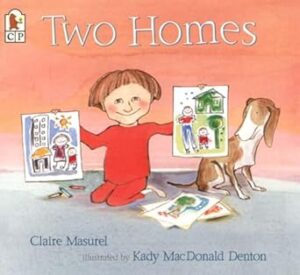
Two Homes — Claire Masurel
This gentle picture book introduces Alex, a child with two houses—one with Mom and one with Dad.
Instead of focusing on loss, the story highlights what’s special about each home, offering a reassuring perspective on separation. Alex finds comfort in knowing that although his surroundings differ, he belongs in both places.
Why kids love it: The text is simple and soothing, with warm illustrations that show the comforts of both homes. Children see that life may change, but they are safe and cared for in both spaces.
Perfect for: Young children just beginning to adjust to living in two households, especially toddlers and preschoolers who need simple, repetitive language.
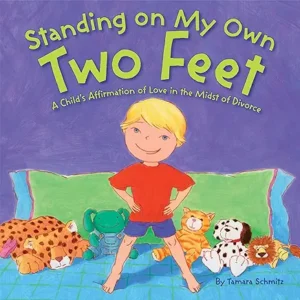
Standing on My Own Two Feet — Tamara Schmitz
A little boy named Addison shares how his parents live in different places but both love him completely.
The bright, bold illustrations and straightforward language make it easy for kids to grasp the central message: divorce does not mean love ends. Addison explains his world with confidence, modeling resilience for readers.
Why kids love it: Addison speaks directly to the reader, making the message of security feel personal and strong. The colorful pages keep even young listeners engaged.
Perfect for: Preschool and early elementary kids needing clear reassurance that both parents still love them.
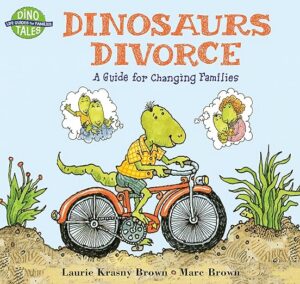
Dinosaurs Divorce — Marc Brown and Laurene Krasny Brown
This classic uses friendly dinosaurs to explain what divorce is, why it happens, and how kids may feel.
It covers everything from new living arrangements to handling emotions, making complex issues easier to digest.
The book doesn’t shy away from hard topics, giving children a chance to ask questions along the way.
Why kids love it: Kids adore the colorful dinosaur characters and find comfort in the playful yet honest approach. The mix of humor and heart helps balance serious themes.
Perfect for: Elementary-age children who have lots of practical questions about divorce and want straightforward answers.
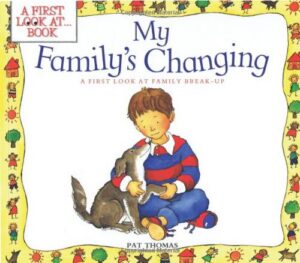
My Family’s Changing — Pat Thomas
This interactive title is part of the “A First Look at…” series and invites children to reflect on their own feelings as they read.
With questions sprinkled throughout, it gently encourages conversation and connection. Kids are prompted to think about their own experiences, making this book a valuable tool for both learning and healing.
Why kids love it: The direct questions let them pause and share, turning reading into a safe space for dialogue. They get to be part of the story, not just listeners.
Perfect for: Families who want a book that sparks open conversation about emotions, particularly with children ages 5–9.
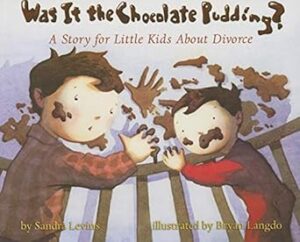
Was It the Chocolate Pudding? — Sandra Levins
Two brothers believe they might have caused their parents’ divorce. Through humor and honesty, this story helps kids understand that divorce is never their fault, while validating the confusion they may feel. The everyday sibling antics keep the tone light while tackling an important message.
Why kids love it: The sibling banter feels real and relatable, giving kids a way to laugh even in tough times. They see themselves in the characters’ worries—and their discoveries.
Perfect for: Kids who might blame themselves for family changes and need clear reassurance.
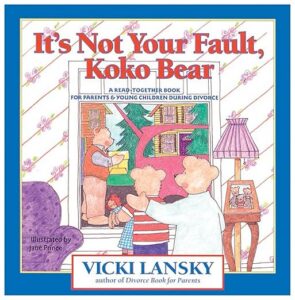
It’s Not Your Fault, Koko Bear — Vicki Lansky
Koko Bear experiences all kinds of big feelings—anger, sadness, confusion—after his parents separate.
The story models healthy ways of coping while reassuring kids that love from both parents remains steady.
Short notes for parents at the bottom of each page give practical tips on what to say in the moment.
Why kids love it: Koko Bear’s emotions mirror their own, making it easy to feel understood. They feel seen and less alone in their struggles.
Perfect for: Children ages 3–7 who need language for their feelings and parents looking for guidance as they read together.
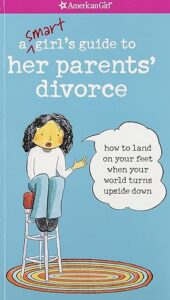
A Smart Girl’s Guide: Parents’ Divorce — Nancy Holyoke
From the American Girl series, this guide tackles divorce with honesty, compassion, and practical tips.
It covers everything from talking to parents to dealing with new family structures in a supportive, empowering tone. It normalizes the experience by showing that many kids go through similar transitions.
Why kids love it: The conversational voice and real-life advice make them feel respected and informed. It feels like having a trusted big sister offering advice.
Perfect for: Tweens navigating divorce and wanting a resource that feels “just for them.”
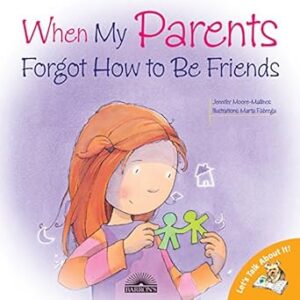
When My Parents Forgot How to Be Friends — Jennifer Moore-Mallinos
This sensitive book acknowledges the tension children sometimes witness between divorcing parents.
It frames disagreements as adult problems, not a child’s fault, and reassures kids that their feelings matter. With gentle artwork and simple storytelling, it opens space for children to talk about what they see at home.
Why kids love it: The story validates the hard-to-name emotions that come with watching parents argue. It shows that kids are not responsible for fixing grown-up problems.
Perfect for: Elementary children who may feel caught in the middle of parental conflict.
Tips for Storytime During Divorce
- Pick books that validate feelings and show kids they are not alone.
- Pause to let your child share their own emotions as you read together.
- End with reassurance: “You are safe and loved—always.”
- Use reading as a nightly ritual—it gives children stability during a time of change.
- Revisit favorite titles often. Repetition builds comfort and predictability.
Create Your Own Family Story
Encourage your child to tell the story of their family in their own words, focusing on love and connection. This creative activity helps them process emotions while celebrating the unbreakable bonds that remain.
- Let them draw pictures of happy times with each parent.
- Invite them to imagine a comforting activity they’d like to do with family.
- Write down their story and read it back together to affirm their feelings.
- Create a collage of photos that shows love from both households.
Help your child feel supported through change with Scrively. Unlimited stories. Unlimited love.
Books for children of divorce don’t just comfort. They provide hope, language, and the steady reminder that love remains constant—always.
As you read together, you give your child not just stories, but the reassurance that home is built on love, wherever they are.