Blast Off! The Best Space Books for Rocket-Loving Kids
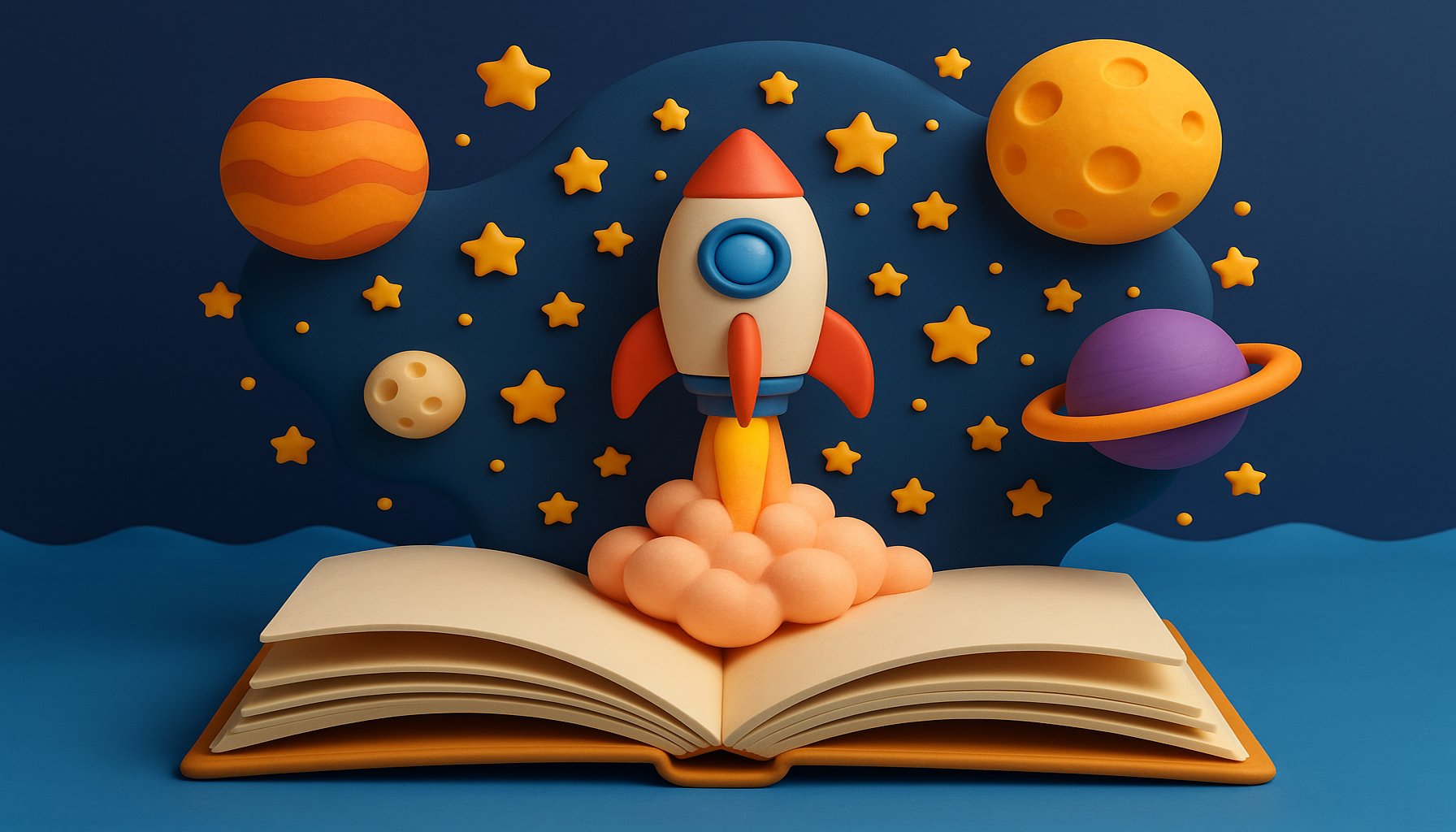
Every child has looked up at the night sky and wondered what’s out there. The moon glowing like a lantern.
Stars that sparkle like diamonds. Rockets shooting into the unknown. Space has a way of capturing a child’s imagination and pulling them into its endless mysteries.
If your little one is obsessed with rockets, astronauts, and planets, books are the best launchpads you can give them.
The right stories don’t just explain facts—they ignite curiosity, spark big dreams, and make science feel like magic.
Whether your child wants to zoom to Mars, count stars, or meet an alien friend, the books below will help them explore the universe from the comfort of your couch.
This collection spans classics, new favorites, interactive gems, and stories that tuck important lessons inside their rocket-fueled fun. Ready to take off? Let’s dive in.
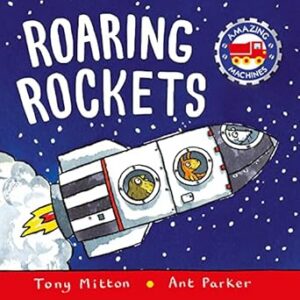
Roaring Rockets — Tony Mitton and Ant Parker
This bouncy rhyming picture book takes kids on a cheerful rocket ride.
With its bold, cartoon illustrations and silly animal crew, even big concepts like thrust, orbit, and gravity feel playful.
Why kids love it: The rhythm makes it a joy to chant along with, and the cat, dog, and mouse astronauts keep little readers giggling.
Perfect for: Toddlers and preschoolers who are just starting to explore outer space through storytime.
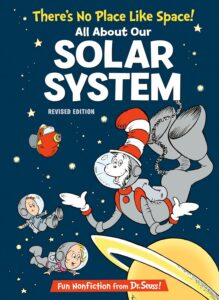
There’s No Place Like Space: All About Our Solar System — Tish Rabe
Dr. Seuss’s Cat in the Hat takes the lead in this fact-packed but lighthearted guide to the solar system.
With bouncy rhymes and colorful pages, kids meet planets, stars, and astronauts in ways that stick.
Why kids love it: The familiar Cat makes science fun, and the rhymes roll off the tongue like a catchy song.
Perfect for: Early readers who love Seuss-style silliness paired with real-world learning.
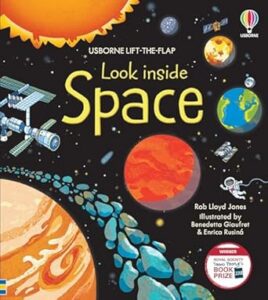
Look Inside Space — Rob Lloyd Jones
Kids lift sturdy flaps to uncover satellites, rockets, planets, and astronauts.
Every page is like a mini-adventure, offering short facts paired with vibrant illustrations. It’s as educational as it is interactive.
Why kids love it: The excitement of lifting flaps keeps their hands busy and their minds curious.
Perfect for: Ages 4–7 who love surprises and discovering hidden details.
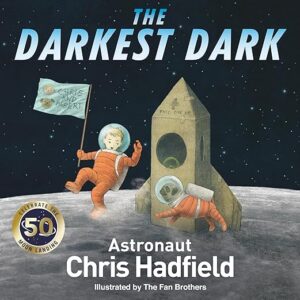
The Darkest Dark — Chris Hadfield
A young Chris Hadfield is afraid of the dark until he dreams of space and learns that darkness can be filled with stars.
This autobiographical story, written by the astronaut himself, is equal parts tender and inspiring.
Why kids love it: They see themselves in a real astronaut’s childhood struggles and triumphs.
Perfect for: Kids ages 5–8 who may need a little courage at bedtime.
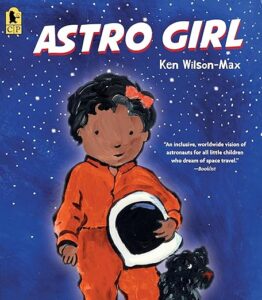
Astro Girl — Ken Wilson-Max
A little girl dreams of becoming an astronaut, role-playing with her dad until bedtime.
The story flips the script with an empowering ending that reveals her mom’s own connection to space.
Why kids love it: It’s playful, affirming, and makes being an astronaut feel personal and possible.
Perfect for: Preschoolers, especially girls who love rockets and big dreams.
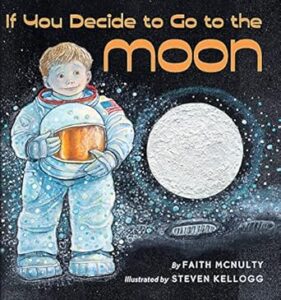
If You Decide to Go to the Moon — Faith McNulty
Written in the second person, this book drops readers right into the astronaut’s seat.
From suiting up to liftoff and walking on the Moon, it makes the journey vivid and unforgettable.
Why kids love it: They can picture themselves bouncing on the Moon’s surface, helmet on and heart racing.
Perfect for: Elementary-age kids who crave a deeper, more immersive experience.
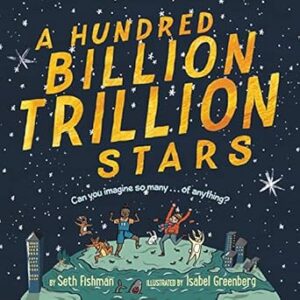
A Hundred Billion Trillion Stars — Seth Fishman
Part fact, part wonder, this beautifully illustrated book makes numbers magical.
From counting stars to imagining the size of the universe, it shows kids that math and awe go hand in hand.
Why kids love it: It makes the infinite feel friendly—and invites endless “how many” questions.
Perfect for: Ages 5–9 who are fascinated by both science and storytelling.
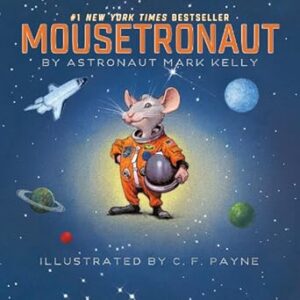
Mousetronaut — Mark Kelly
Written by astronaut Mark Kelly, this story follows a small mouse who helps a space mission succeed.
It’s a tale of bravery, teamwork, and believing that even the smallest hero can make a big difference.
Why kids love it: The underdog hero is relatable and inspiring, and the real astronaut author makes it extra special.
Perfect for: Ages 4–8 who love animals and heroic adventures with a cosmic twist.
Storytime Tips for Space Explorers
- Pick books with vivid illustrations of planets, rockets, and galaxies.
- Encourage your child to count stars, moons, or astronauts on each page.
- Pause to ask “What do you think is out there?” and let their imagination roam.
- Use funny voices for astronauts, aliens, or even rockets to keep kids engaged.
- End with a “mission accomplished” high-five to make storytime feel like an adventure.
Create Your Own Space Adventure
Books are just the beginning. Invite your child to design a space mission of their own. The fun doubles when imagination meets creativity.
- Let them choose their crew: maybe a favorite stuffed animal or the whole family.
- Ask what planet or galaxy they’ll visit first—Mars, Saturn’s rings, or a made-up world?
- Draw rockets together, build planets out of clay, or paste alien pictures into a homemade storybook.
- Create a “space log” where your child can record discoveries: new stars, planets, or even silly aliens.
Fuel their imagination with Scrively. Unlimited stories. Unlimited adventures.
Remember, space books don’t just teach facts. They launch kids into wonder, showing them that the universe is big, exciting, and waiting to be explored—one story at a time.