The Quiet Strength of the Long Game: Cultivating the Gift of Patience
You know that feeling in your chest. It starts when the “Are we there yet?” hits for the fourteenth time.
Often, you haven’t even cleared the city limits yet. It feels like a tightening—a small internal sigh. Suddenly, the clock moves in slow motion for the small person in the backseat.
We live in a world of instant gratification. The next episode plays automatically. Packages arrive before the sun sets.
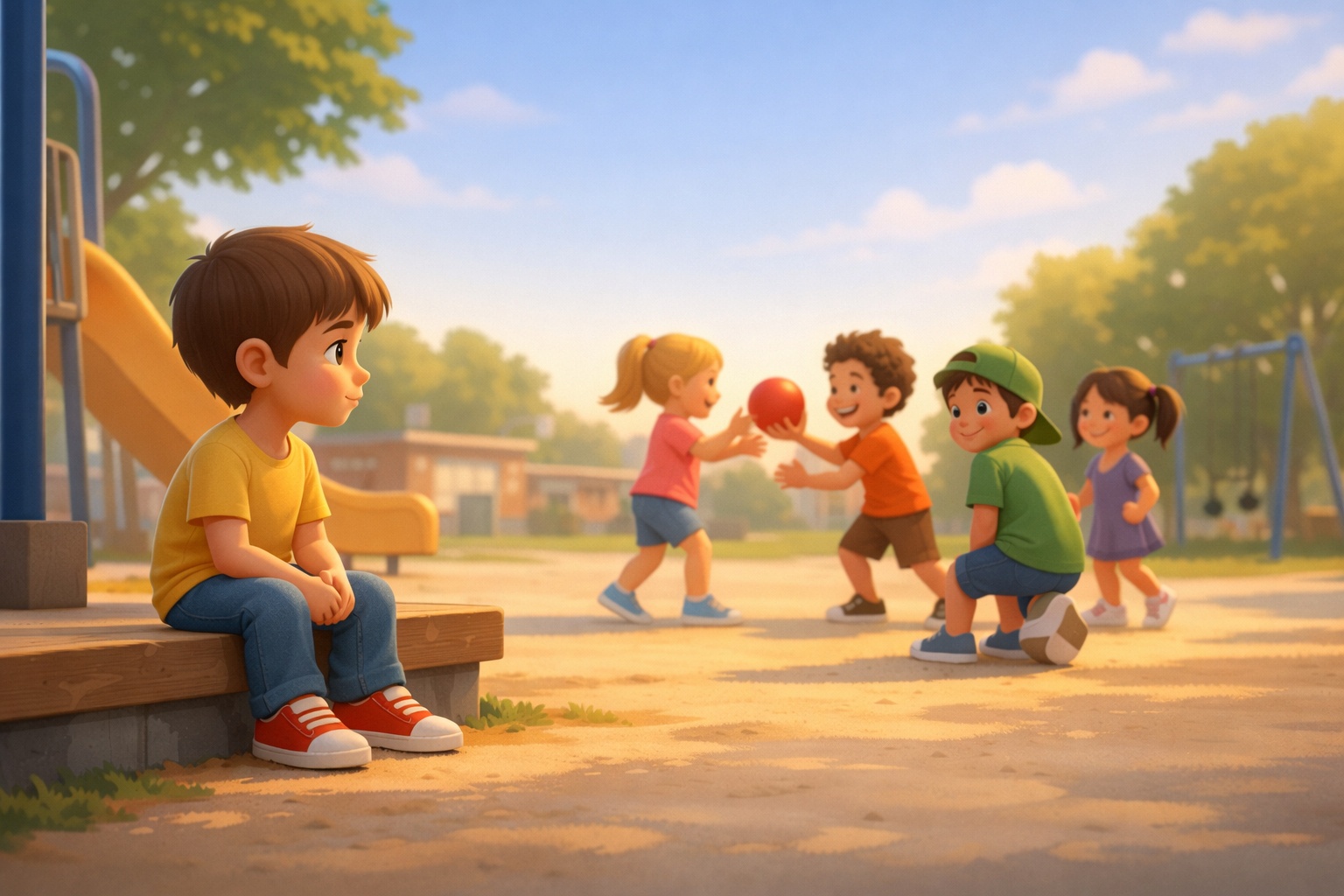
However, for a child, existence is a series of “not yet” and “wait your turn.” For them, patience isn’t just a virtue. It is a monumental, mountain-climbing feat of emotional regulation.
You see this struggle clearly.
They vibrate with the need for the birthday cake to be cut. You feel it when they pull at your sleeve while you try to finish a single sentence.
But here is the beautiful truth: patience is more than just waiting. It is the ability to keep a good attitude while you wait.
Patience is an internal sanctuary.
We help children build it brick by brick. When we teach them to wait, we teach them that the world does not revolve around their immediate impulses. Instead, life moves to a rhythm of seasons and shared space.
Because of this, patience is a slow-burn skill.
We must be the anchors in their storm of urgency. We can offer words like “soon” and “after” with gentleness.
This turns frustration into anticipation. Consequently, we teach them that the best things are worth the time they take to arrive.
Think of patience as a muscle. It needs specific resistance training to grow. This skill doesn’t develop when things are easy.
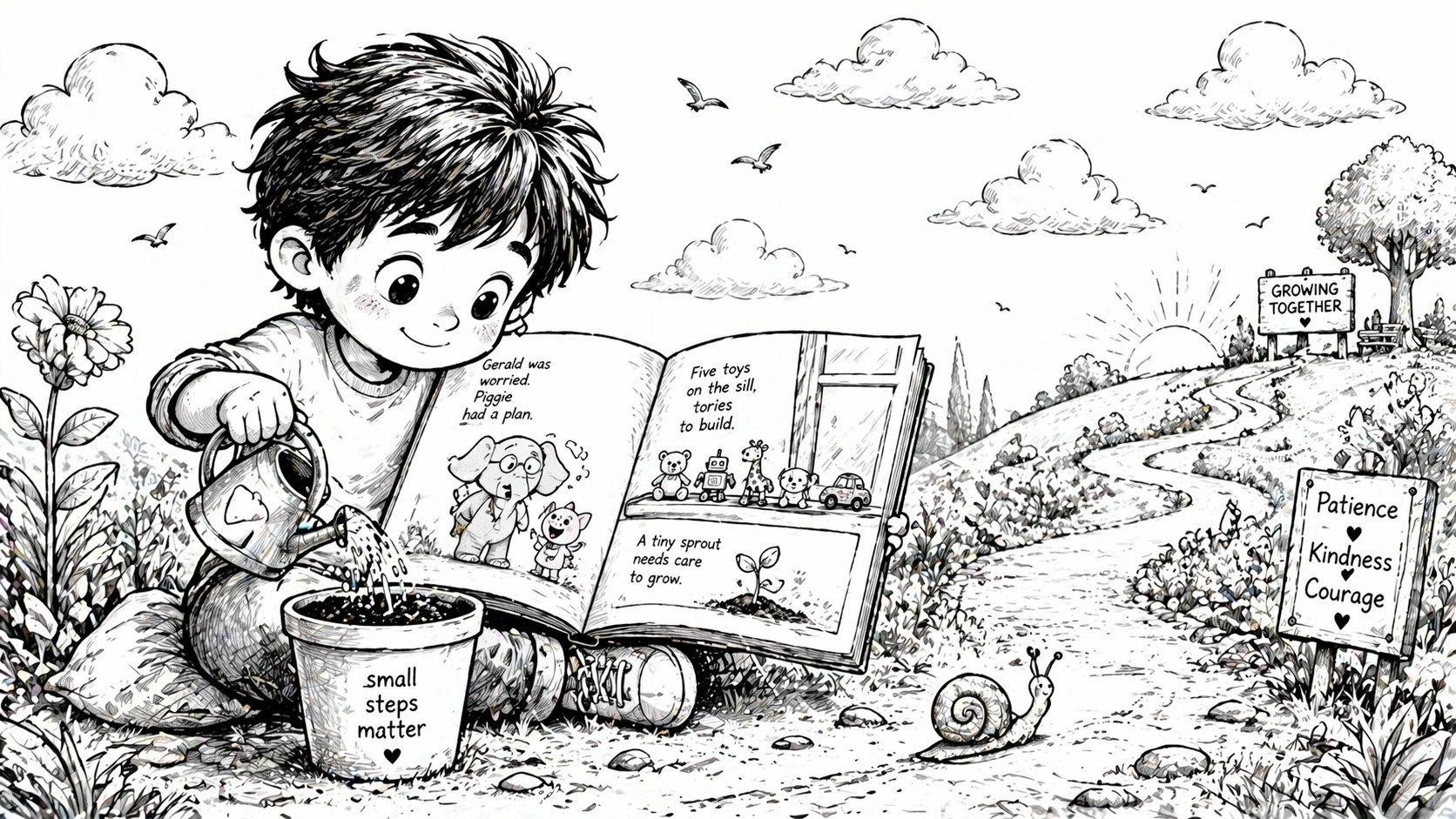
Instead, it grows right in the thick of desire. For example, your child grows stronger every time they wait for a red light without a meltdown.
You are their guide on this long walk. You show them that the waiting room isn’t a vacuum of lost time.
It is a space for dreaming and preparing the heart. By reading together, you invite them into stories where characters struggle just like they do. These books make the abstract concept of “later” something they can hold in their hands.
As you settle into these stories, remember your role. You are doing more than occupying their time.
You are co-regulating with them. You offer a Mirror to see their impatience and a Map to find their way through it. These books are tools for your toolkit.
Remember that even the tallest oak tree was once a nut. It sat in the dark for a long time.
You are building their resilience one page at a time. In doing so, you give them the gift of a calmer future. Let these narratives be the bridge between “I want it now” and “I can wait for what matters.”
The Waiting Room of the Heart: Books That Teach the Art of the Wait
Waiting by Kevin Henkes
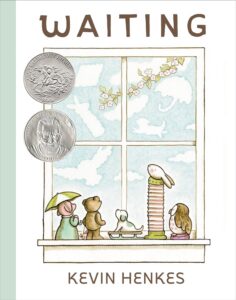
There is a profound, meditative stillness in this book. It feels like a deep breath for both parent and child.
It doesn’t move with a frantic plot. Instead, it sits on a windowsill with five different toys. Each toy waits for something specific, like the moon or the rain. Therefore, the atmosphere feels peaceful rather than anxious.
What kids notice: The gentle expressions on the toys’ faces. They also see the small changes in the weather that signal the passage of time.
Story snapshot: Five toys sit on a windowsill and look out at the world. An owl waits for the moon. A pig waits for the rain. A puppy waits for the snow. They experience joy when their “thing” happens. They also welcome new friends, showing that waiting is a shared journey.
Why this book helps: This story reframes patience as a form of presence. It helps children understand that beautiful things happen while we wait for one specific goal. For the child who feels like “nothing is happening,” this book proves that the world is always in motion.
Waiting Is Not Easy! by Mo Willems

If the first book is a meditation, this one is a comedy routine. It hits close to home for every toddler. Gerald the elephant personifies the emotional agony of waiting for a surprise.
Meanwhile, Piggie is the keeper of the secret. She gently insists that the wait is necessary.
What kids notice: The dramatic change in Gerald’s size. They also love the giant “GROAN!” and “MOAN!” speech bubbles that grow with his frustration.
Story snapshot: Piggie has a surprise for Gerald, but he must wait. Gerald goes through every stage of frustration.
He complains that waiting is hard and taking too long. However, just as he reaches his breaking point, the surprise appears: a breathtaking view of the Milky Way.
Why this book helps: It provides emotional release through humor. By seeing Gerald lose his cool, children can laugh at their own impulses.
Most importantly, the ending justifies the wait with a spectacular payoff. It reinforces the idea that some things simply cannot be rushed.
[Image Placeholder: A colorful stack of classic children’s picture books resting on a wooden table next to a half-full glass of water – 1792×1024]
The Carrot Seed by Ruth Krauss
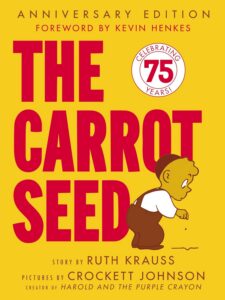
This is the ultimate anthem of the patient heart. It is a story so simple it feels like a fable.
A little boy plants a seed, but everyone tells him it won’t come up. There is no magic or shortcut here. There is only the daily work of pulling weeds and sprinkling water.
What kids notice: The boy’s consistent actions. They also notice how certain the adults are that he is wasting his time.
Story snapshot: A little boy plants a carrot seed. His family all say, “It won’t come up.” Every day, the boy pulls weeds and waters the ground.
For a long time, nothing happens. But he keeps going anyway. Finally, a giant carrot appears, just as he knew it would.
Why this book helps: It teaches children that patience is actually work. It’s the “sprinkling of water” when you can’t see progress yet. For a child learning a new skill, this book is a vital reminder. It shows that the “nothing” period is a necessary part of growth.
Owl Babies by Martin Waddell
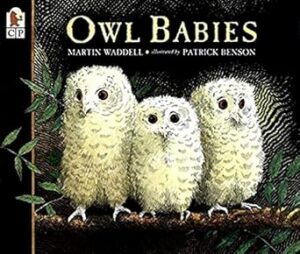
For young children, the hardest wait is for a parent to return. This book tackles separation anxiety directly. Three owl siblings express different levels of coping. While the older ones use logic, little Bill simply wants his mother. It is a tender exploration of trust.
What kids notice: The dark, detailed feathers and the big, expressive eyes. They can see the worry in the shadows of the night.
Story snapshot: Three baby owls wake up to find their mother gone. They wonder where she went and when she will return. They sit on a branch and wait together. As the night grows darker, they get nervous. Finally, their mother flaps silently back to them.
Why this book helps: This story offers a template for emotional regulation. It acknowledges that waiting can be scary. By reading this, you give your child a “success story” for the next time they are with a babysitter. It builds the psychological stamina needed to handle separation.
A Butterfly Is Patient by Dianna Hutts Aston
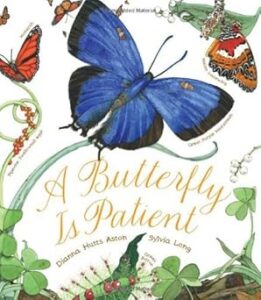
Patience isn’t always a struggle. Sometimes, it is a magnificent transformation. This book explores the life cycle of butterflies. It positions the “wait” as a period of intense, hidden activity. The prose is lyrical and the illustrations are breathtaking.
What kids notice: The incredible variety of colors on the wings. They also find the strange shapes of the different chrysalises fascinating.
Story snapshot: The book journeys through every stage of a butterfly’s life. It explains how a butterfly is patient while it waits to hatch and grow. It frames their entire existence as a series of perfectly timed events. Because of this, nothing can be hurried.
Why this book helps: It shifts the perspective of patience from an “annoyance” to a “power.” It shows that beauty often results from waiting in the dark. For a child frustrated by slow growth, the chrysalis is a powerful metaphor. It teaches them that being patient is a way of being ready.
Jabari Jumps by Gaia Cornwall
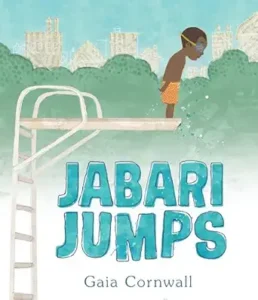
Patience often looks like gathering courage. In this story, Jabari is ready to jump off the diving board—or so he says.
He watches other kids go. He stretches and considers his options. It’s a realistic look at the patience required to wait until your heart is ready.
What kids notice: The way Jabari’s father doesn’t push him. He just squeezes his hand and stays close while Jabari works through his feelings.
Story snapshot: Jabari is at the pool with his family. He says he’s ready for the big board, but he hesitates at the ladder.
He decides he needs to plan a “special jump” first. His dad is patient and allows him space to be nervous. Eventually, Jabari takes the leap.
Why this book helps: This story shows that patience can be directed toward oneself. It validates the “slow start.” For kids who feel pressured, Jabari’s story is a permission slip to take their time. It teaches that the “wait” isn’t a failure—it’s the preamble to success.
Saturday by Oge Mora
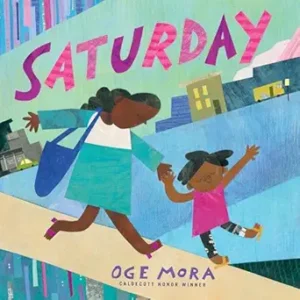
What happens when the thing you’ve been waiting for goes wrong? This book explores resilience.
A mother and daughter have a specific Saturday routine. However, one by one, their plans are ruined. It’s a story about the grace needed when a wait feels like it was for nothing.
What kids notice: The vibrant, collage-style illustrations. They also notice how the characters take a deep breath together whenever something goes wrong.
Story snapshot: Ava and her mother cherish Saturdays. They have a list of things to do, like a puppet show and a picnic. Unfortunately, everything falls through. The day seems ruined. However, they find a way to make it special anyway through their connection.
Why this book helps: It addresses the reality that patience doesn’t guarantee a perfect outcome. It teaches “patience with life.”
By showing the characters taking deep breaths, it gives children a physical tool for managing frustration. It emphasizes that the most important part of the wait was the time spent together.
The Squirrels Who Squabbled by Rachel Bright
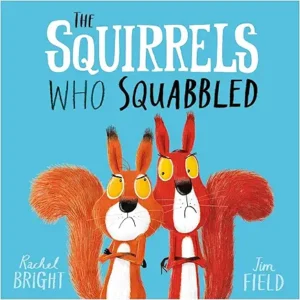
Sometimes impatience is fueled by fear. In this rhyming tale, two squirrels are desperate to get the “last nut.” They are so focused on getting it right now that they ignore safety. It’s a cautionary tale about the chaos caused by immediate impulses.
What kids notice: The funny, frantic action sequences. The squirrels chase the nut over waterfalls and through the forest in a wild race.
Story snapshot: Cyril didn’t plan ahead, and Bruce wants even more than he has. They both spot a giant pinecone and a chase begins. They fight and eventually end up in a dangerous river. Only after losing the nut do they realize their “hurry” was their biggest enemy.
Why this book helps: It illustrates the social cost of impatience. When we can’t wait, we often lose what we were chasing.
The rhyming meter makes the frantic pace feel real. It’s a great conversation starter about why rushing can make us miss out on friendship.
Put Your Child in the Heart of the Story
The books we’ve explored are wonderful mirrors. However, sometimes a child needs to be the one holding the watering can.
At Scrively, we believe virtues are best learned when the story is about *you*. Imagine a personalized book where your child waits for a mysterious package.
When your child sees their own name in a story about “The Art of the Wait,” the lesson moves to the heart. It’s not just a story about an elephant. It’s a story about their own capacity for strength. Our custom stories celebrate your child’s growing heart and emotional milestones.
Finding the Rhythm in the Delay
As you tuck your little one in tonight, remember that you are playing the long game too. You are waiting for these seeds of character to sprout. Some days, the ground feels bare. But don’t be discouraged. Your work—the reading and the gentle “not yet”—is the water and sun they need.
Patience is a shared journey. By modeling it, you teach them that the world is worth waiting for. Moreover, you teach them that they are worth the wait too. Keep going. You are doing a beautiful job, and the harvest will be more wonderful than you can imagine.