The Truth Treasure: Helping Your Child Find the Courage of Integrity
You are standing in the hallway.
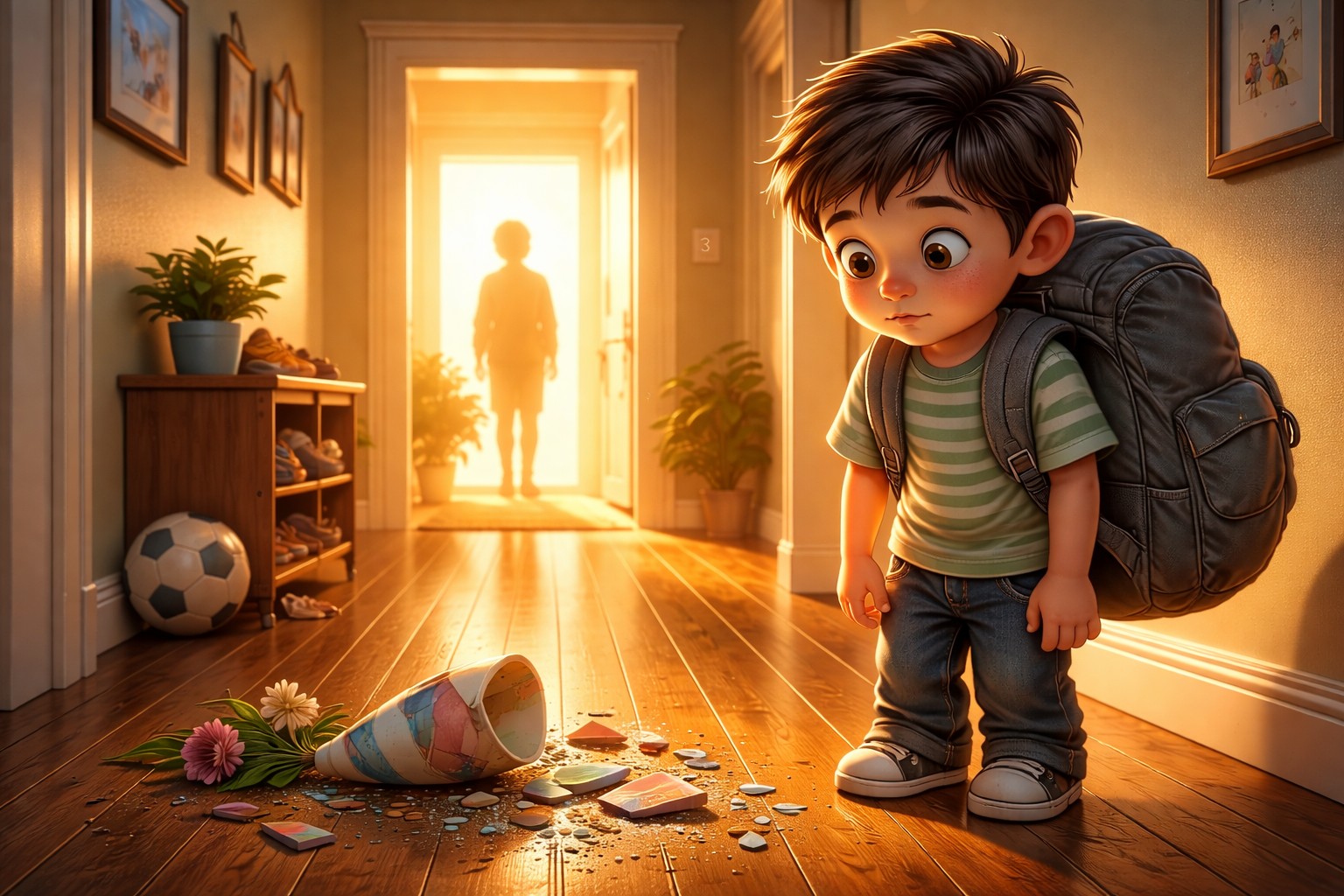
The air feels thin. Your eyes drop to the jagged pieces of a favorite vase.
Perhaps you see a blue smudge on the white duvet. Before you speak, you see it in them. You see the slumped shoulders and the darting eyes. In this quiet moment, your child is at a crossroads.
They are weighing the safety of a lie against the scary vulnerability of the truth. It is a heavy moment for a small heart.
We often treat honesty like a simple rule. However, for a child, it feels like a survival skill. When they look at you, they aren’t just deciding whether to hide the facts.
They are testing the strength of your love. They want to know if their world is sturdy enough to hold a mistake.
Integrity is not something we are born with. Instead, it is a muscle built through small, brave repetitions. It is the relief of coming clean together.
Teaching honesty is not about the fear of punishment. It is about gifting your child the freedom of a clear conscience.
A lie is a heavy backpack that no child should have to carry. As parents, we make the truth feel safe. We create a home where “I did it” is met with a steady hand. Stories help us bridge this gap.
They allow kids to see the “itchy” feeling of a lie from a distance. Through these pages, they learn that the truth is the shortest path back to peace.
Stories That Turn Truth Into a Superpower
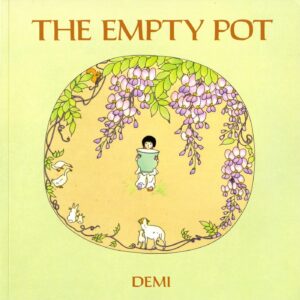
The Empty Pot by Demi
This story is a quiet masterpiece about the bravery of “failing.”
The illustrations are delicate and draw you into a world where flowers represent a person’s worth. It is a rhythmic tale that shows how the most beautiful thing we grow is our own character.
You can feel the protagonist’s shame turn into a different kind of strength. It is a meditation on being the only one to stand by the truth.
What kids notice: They see the vibrant, massive flowers held by the other children.
Then they see Ping’s empty, brown pot. They feel the weight of his sadness and the immense courage it takes to stand before the Emperor with nothing but his honesty.
Story snapshot: An Emperor gives seeds to all the children. He promises his throne to the one who grows the best flower.
Ping is a master gardener, but his seed never sprouts. He courageously presents his empty pot, only to learn the seeds were cooked.
Because he didn’t swap his seed, he is the only honest child.
Why this book helps: It redefines what it means to win. In a world that rewards results, this book teaches that integrity is your most valuable asset.
It shows children that being honest is the ultimate victory, even when it looks like you’ve lost. It anchors the virtue of integrity in the idea that being “right” is better than being “first.”
Ruthie and the Not-So-Teeny Tiny Lie by Laura Rankin
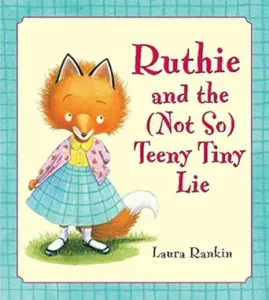
Ruthie is a fox who loves tiny things. Her story captures that “itchy” stomach feeling of a secret perfectly.
The art is expressive and shows how a lie grows. It doesn’t just stay in your mouth. Instead, it follows you to the dinner table and into bed. It is a very relatable look at how wanting something can lead to a heavy heart.
What kids notice: They notice how Ruthie’s favorite food tastes like nothing because she is worried.
They see her ears droop and her eyes get wide. The “teeny tiny” lie starts to feel like a giant, heavy cloud hovering over her head.
Story snapshot: Ruthie finds a tiny camera on the playground. She tells her teacher it was a birthday gift.
The guilt eats at her all night until she finally confesses the next morning. Her teacher is kind, the camera goes back to its owner, and Ruthie finally feels like herself again.
Why this book helps: It focuses on the internal cost of lying. Instead of focusing on “getting in trouble,” it helps children identify that “yucky” physical feeling of dishonesty.
It models how confession brings immediate relief. This shows kids that parents and teachers are there to help them fix things, not just to catch them being “bad.”
A Day’s Work by Eve Bunting
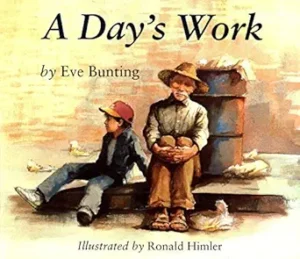
This is a grounded story about the weight of a person’s word. It is set in the world of hard work and family legacy.
It shows that honesty is the foundation for a good life. The relationship between the grandfather and grandson is the heart of the book.
It moves from a moment of disappointment to a deep lesson in dignity and respect.
What kids notice: They notice the confusion when the “weeds” turn out to be the wrong plants.
They see the grandfather’s face change when he realizes a lie was told. They also see the hard work required to fix a mistake in the hot sun.
Story snapshot: Young Francisco lies about his grandfather’s experience to get a gardening job.
When they accidentally destroy expensive plants, the grandfather insists they return the next day to work for free. He teaches Francisco that a man’s word is his most important tool.
Why this book helps: It tackles the idea of “lying for a good reason.” It shows why that shortcut still leads to trouble.
More importantly, it emphasizes the “fix.” Integrity is about the courage to make things right after you have stumbled.
This helps children see that while we can lose time, we must never lose our reputation for truth.
The Honest-to-Goodness Truth by Patricia C. McKissack
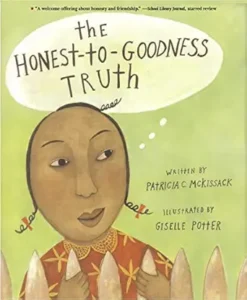
This book explores the tricky side of honesty. It teaches the difference between being truthful and being mean.
It is a rhythmic story that follows Libby as she learns that the truth should be used to help.
This is an essential lesson for children who have learned that lying is bad but haven’t yet learned the art of kindness.
What kids notice: They see the hurt faces of Libby’s friends when she blurts out their secrets.
They notice how people start to avoid her. Even though she thinks she is doing the right thing, her “honesty” starts to feel a lot like meanness.
Story snapshot: After being caught in a lie, Libby promises to tell only the truth.
However, she starts pointing out everyone’s flaws in public. This causes a lot of pain. Her mother helps her realize that the truth is only good when it is told with a kind heart.
Why this book helps: It teaches social integrity and empathy. It moves beyond the simple “yes or no” of truth-telling.
For parents, this is a perfect tool to discuss the “why” behind our words. It helps children understand that being a person of integrity also means being a person of character who considers others.
The Berenstain Bears and the Truth by Stan & Jan Berenstain
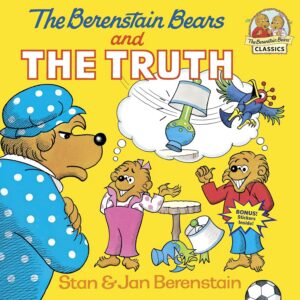
This is the classic “broken lamp” story that every family knows. It is simple, nostalgic, and very effective.
It shows how a tiny lie requires a whole tower of bigger lies to stay standing. The Bear family provides a safe mirror for children to see their own domestic dilemmas played out with humor.
What kids notice: They see the “Trust Meter” in Mama Bear’s eyes. They notice the silliness of the “bird” story the cubs make up.
They also see how much better the cubs look once the truth is finally out in the open.
Story snapshot: Brother and Sister Bear break a lamp while playing soccer indoors.
They blame it on a bird that flew through the window. As the lie gets bigger, the guilt grows. Eventually, they confess. Mama Bear explains that trust is like a vase that is hard to fix.
Why this book helps: It provides a perfect metaphor: the “cracked vase.”
This helps children visualize the invisible damage that lying does to a relationship. It also highlights the reality that parents usually already know the truth. It shifts the focus from “getting in trouble” to “protecting the trust” in the family.
The Boy Who Cried Wolf (Classic Aesop’s Fable)
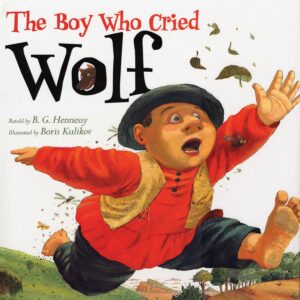
There is a reason this story has survived for thousands of years. It is the ultimate lesson about the long-term consequences of “just joking” with the truth.
The rhythm of the boy’s repeated shouts creates a tension that even young children can feel. It shows how trust is earned slowly and lost quickly.
What kids notice: They notice the boy’s boredom and how fun the trick seems at first. They feel the shift in the air when the real wolf finally shows up and nobody moves to help him. They see the silence of the village.
Story snapshot: A shepherd boy tricks his village by shouting that a wolf is attacking his sheep.
He does this many times. When a real wolf actually arrives, the villagers assume he is lying again.
They stay home, and the flock is lost because no one believed him.
Why this book helps: It teaches the “Bank of Trust” concept. Every time we tell the truth, we make a deposit.
Every lie is a massive withdrawal. This helps children understand that honesty is actually a form of safety.
Without it, we are vulnerable when we truly need help from others.
Lying Up a Storm by Julia Cook
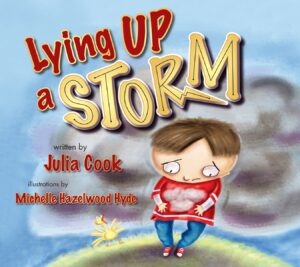
This book uses the metaphor of a storm to describe how lies spiral out of control.
It is very conversational and child-centric. It focuses on the physical sensations of being dishonest.
It is a great choice for kids who struggle with “imaginative” lying that happens before they even think about it.
What kids notice: They see the literal storm clouds and rain that swirl around the main character, Pete.
They notice how his “little fibs” start to rain on everyone else. This makes life miserable for his friends and his family.
Story snapshot: Pete tells “weather lies” to get what he wants. His mother explains that a lie is like a small dark cloud that grows.
Pete learns how to “clear the air” by telling the truth and taking responsibility for his actions in the moment.
Why this book helps: It gives parents a vocabulary to talk about lying without it feeling like a lecture.
Using “weather” makes the concept of consequences easier to grasp. It emphasizes that the truth is like the sun. It clears the air and makes everything feel bright and safe again for everyone.
Sam, Bangs & Moonshine by Evaline Ness
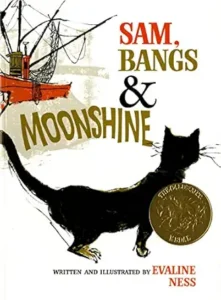
This is a beautiful book about the line between imagination and lies. Sam calls her tall tales “Moonshine.”
It is a sophisticated story that deals with the real-world danger of pretending things are true when they aren’t. It is perfect for children with vivid imaginations who need to learn where play ends.
What kids notice: They love the misty illustrations and Sam’s cat, Bangs.
They notice the scary moment when Sam’s “moonshine” puts her friend in real danger. They see the regret in Sam’s eyes as the tide begins to rise.
Story snapshot: Sam tells stories about her mother being a mermaid. She sends her friend Thomas on a dangerous mission to find a baby kangaroo that doesn’t exist.
When Thomas nearly drowns, Sam finally learns the difference between a good story and a dangerous lie.
Why this book helps: It honors a child’s imagination while establishing the importance of reality.
It shows that integrity is about being responsible for the well-being of others. It helps children distinguish between the fun of a story and the necessity of the truth when people’s safety is on the line.
Put Your Child in the Heart of the Story
Reading about these characters is a wonderful start. However, imagine the impact of your child seeing their own name on these pages.
At Scrively, we believe that when a child becomes the hero of a story about integrity, the lesson sticks.
Imagine a book where your child chooses to tell the truth about a broken toy.
By personalizing these journeys, you aren’t just teaching a rule. You are letting them practice being a hero. You are giving them a safe space to feel the pride of honesty long before the stakes get high.
Conclusion
Honesty is more than just “not lying.” It is the decision to live in the light so you never have to hide.
When we guide our children toward integrity, we give them a lifetime of better sleep and deeper friendships. The next time you face a “broken vase” moment, remember it is an opportunity.
Reach for a story and reach for their hand. Show them that the truth is always the best way home.
You are doing a great job, and their transparent heart is the greatest reward.