Beyond the Playground: Using Window Books to Teach the Language of Kindness
You are standing at the edge of the playground, and you see it happen. A little girl in a bright yellow sweater trips over a stray woodchip and lands hard on her knees.
The tears start almost instantly.
You look over at your own child, who is just a few feet away, expecting to see a flash of concern or a move to help.
Instead, they just keep focused on their plastic shovel, humming a quiet tune. In that moment, it’s easy for your heart to sink just a little bit, wondering if you missed a lesson in kindness somewhere along the way.
Here is the truth that every parent needs to hear: your child isn’t being “mean” or uncaring. They are simply navigating the empathy gap.
At this age, a child’s world is naturally centered on their own immediate experiences, needs, and feelings.
Stepping out of their own skin to imagine the internal weather of someone else is a massive developmental leap.
It is a sophisticated cognitive skill that requires practice, and right now, their “empathy muscle” is still in the early stages of training.
This is where stories become our most powerful ally.
We often think of books as a way to teach reading or to entertain, but they are actually the ultimate rehearsal space for the human heart.
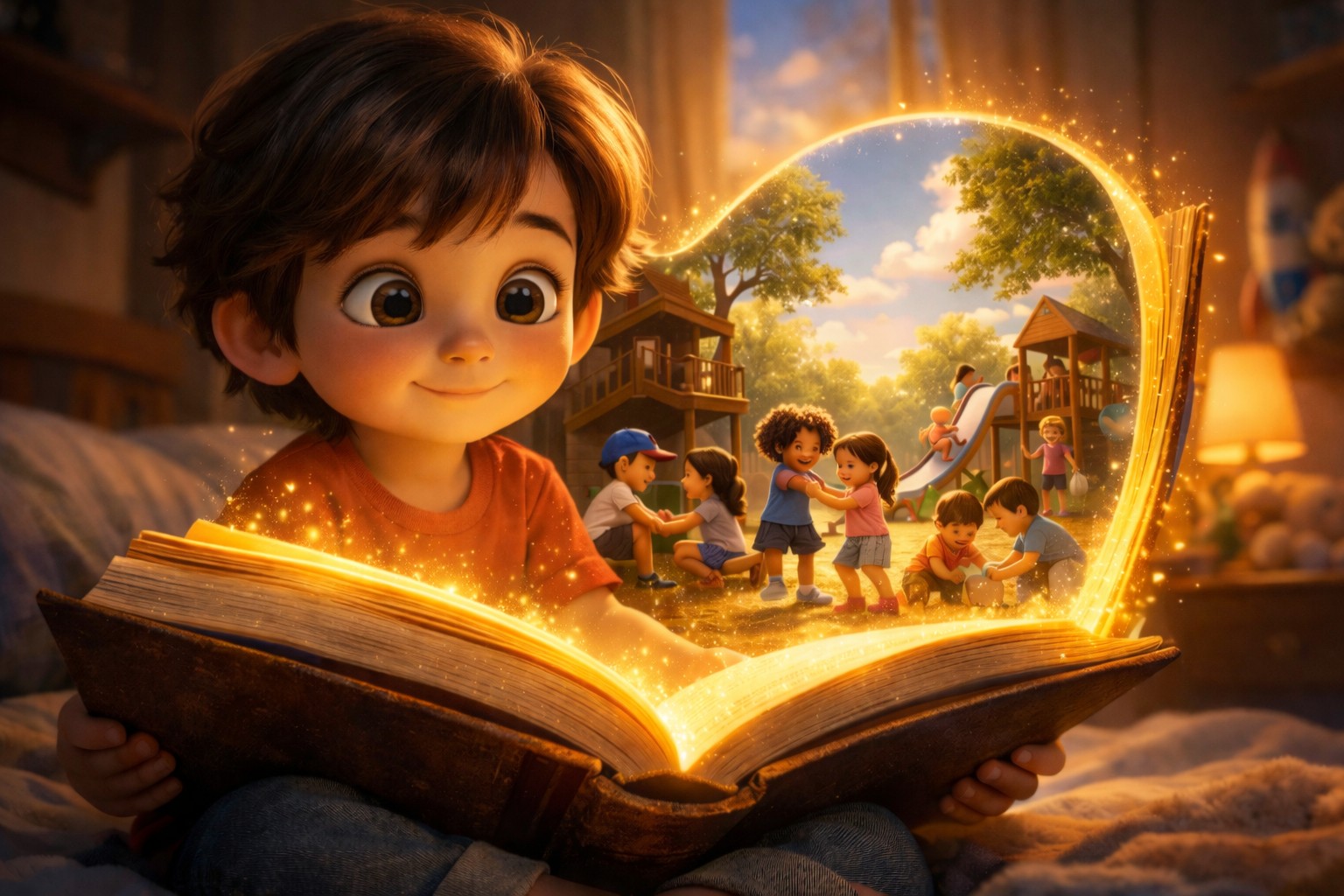
A great story acts as a “window,” allowing your child to peer into a life, a challenge, or a feeling they haven’t personally experienced.
Inside the pages of a book, the stakes are low but the emotional impact is high.
They can feel the sting of being left out or the joy of an unexpected gift without the overwhelming pressure of a real-world social situation.
When we read with our kids, we aren’t just passing the time before bed; we are helping them build a bridge across that empathy gap.
By talking about how a character feels or why they might be acting a certain way, you are giving your child the vocabulary of compassion.
You are showing them that the world is full of different “normals,” and that noticing those differences is the first step toward caring about them. It turns “that kid who is crying” into “someone who feels like the boy in our story did.”
Come with Me — Holly M. McGhee
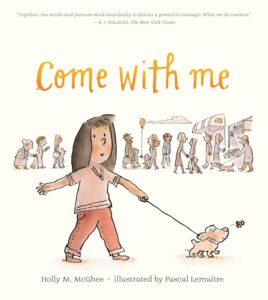
When the news is full of frightening stories, a young girl asks her parents what she can do to make the world a better place.
Instead of a grand gesture, her parents show her the power of small, intentional acts of kindness and the importance of simply “being with” others in our community.
What kids notice is the way the characters interact with their neighbors. They see the girl and her father walking to the subway and her mother taking her to the grocery store.
They notice how a simple nod, a shared walk, or a friendly “hello” to someone who looks different can change the energy of a whole day.
The story snapshot is a gentle reminder that we don’t have to fix the whole world to be kind.
It focuses on the girl as she learns to walk through her neighborhood with an open heart. By the end, she is the one inviting another child to “come with me,” passing on the lesson of inclusion she learned from her parents.
Why this book helps is by showing that empathy is a verb.
It’s not just a feeling we have; it’s something we do. It helps bridge the gap by showing children that they have the agency to connect with others, even when the world feels big and confusing.
The Day You Begin — Jacqueline Woodson
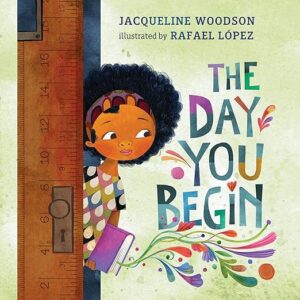
There will be times when your child walks into a room and realizes no one else is quite like them. Maybe it’s their skin, their hair, or the way they talk.
This book captures that breathtaking moment of feeling like an outsider and the courage it takes to share your own story anyway.
What kids notice is the feeling of being “the only one.”
They see the main character standing at the edge of the circle, watching others talk about their summer travels while she stayed home.
They recognize the quiet weight of feeling different and the relief that comes when someone finally reaches out to listen.
The story snapshot follows several children who feel disconnected from their peers for different reasons.
As they begin to share their unique experiences, the “gap” between them closes. It’s a beautiful exploration of how vulnerability leads to connection and how our differences are actually the things that draw us together.
Why this book helps is because it builds empathy for the “outsider” experience.
It teaches children that everyone has a story worth telling and that by listening, we make it safe for others to be themselves. It’s a perfect “window” into the nerves of starting something new when you don’t feel like you fit in.
Small in the City — Sydney Smith
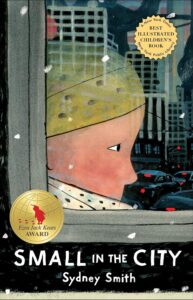
The city can be a loud, overwhelming place, especially when you are small.
This book follows a child walking through a snowstorm, giving advice to someone we can’t see yet about where to find warmth, where to hide from the wind, and who to trust in the neighborhood.
What kids notice is the atmosphere of the city. They feel the cold, the noise of the sirens, and the height of the buildings.
They resonate with the child’s perspective—how everything seems giant and a bit scary when you’re little—and they feel the child’s deep concern for the “someone” they are looking for.
The story snapshot is a masterclass in perspective-taking.
As the child points out the best vents for warm air and the friendliest fishmonger, we realize they are looking for a lost cat.
The child’s empathy for the pet’s struggle in the cold is palpable, making the final reunion feel like a victory for compassion.
Why this book helps is by fostering empathy for those smaller or more vulnerable than we are.
It encourages children to think about what someone else might need to feel safe and comfortable in a difficult environment. It’s a quiet, visual journey into the heart of a caregiver.
A Sick Day for Amos McGee — Philip C. Stead
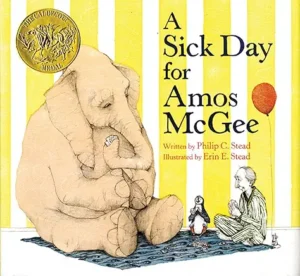
Amos McGee is a zookeeper who takes great care of his animal friends, making sure to play chess with the elephant and sit quietly with the penguin.
But one day, Amos wakes up with a cold and can’t make it to work. The animals, noticing his absence, decide it’s time to return the favor.
What kids notice is the specific ways Amos cares for each animal. They see that he doesn’t treat them all the same; he gives them exactly what they need.
They also love the “role reversal” when the animals take the bus to Amos’s house to bring him tea and keep him company.
The story snapshot is a sweet cycle of reciprocal empathy. It shows that kindness isn’t a one-way street. Because Amos took the time to understand and care for the animals, they developed the capacity to understand and care for him when he was at his weakest.
Why this book helps is by illustrating the rewards of empathy.
It teaches children that when we invest in understanding others, we build a community that supports us in return. It’s a heartwarming look at how simple, consistent acts of noticing others create deep bonds of friendship.
Lubna and Pebble — Wendy Meddour
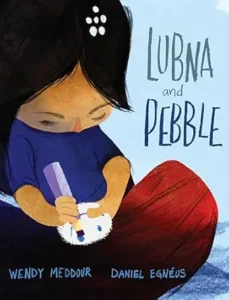
Lubna’s best friend is a pebble she found on the beach when she arrived in a “World of Tents.”
The pebble listens to her stories and knows all her fears.
But when Lubna meets a little boy named Amir who is cold and alone, she realizes he needs the pebble’s friendship even more than she does.
What kids notice is the simplicity of Lubna’s world.
They see the tents and the lack of toys, which helps them understand a refugee experience in a way that feels accessible.
They notice the bond Lubna has with her pebble and how much it means to her, making her eventual gift to Amir feel incredibly significant.
The story snapshot is a poignant look at sacrifice.
Lubna has very little, but her empathy for Amir’s loneliness outweighs her own need for her “best friend.” By giving him the pebble, she gives him hope and a sense of connection, showing that even a small stone can be a bridge between two hearts.
Why this book helps is by providing a “window” into a global reality with deep compassion.
It helps children understand that empathy often requires giving of ourselves—even the things we cherish—to help someone else feel less alone. It’s a powerful lesson in the virtue of generosity born from empathy.
The Many Colors of Harpreet Singh — Supriya Kelkar
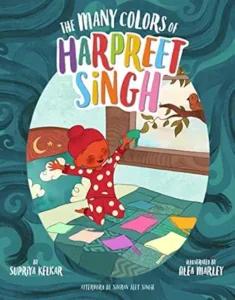
Harpreet Singh loves colors and uses different colored turbans to express how he feels: yellow for happy, pink for like-a-rose, and blue for nervous.
But when his family moves to a new, snowy city, Harpreet starts wearing white to feel invisible, until a new friend helps him find his colors again.
What kids notice is the visual emotional language.
They immediately grasp the idea of “wearing” your feelings and can relate to the desire to hide when things feel too overwhelming or different.
They see Harpreet’s sadness in his white turban and his joy when he finally puts on a bright yellow one again.
The story snapshot follows Harpreet as he navigates the loneliness of a new school and the coldness of a new climate.
It isn’t until he finds a lost hat and returns it to a girl named Abby that a friendship sparks. Abby notices Harpreet’s colors, and in doing so, helps him feel seen and valued for who he is.
Why this book helps is by giving kids a tool to “read” the emotions of others.
It encourages them to look for the “colors” in their friends—the subtle cues that tell us how someone is feeling. It bridges the gap by making the internal world of feelings something we can notice and talk about.
Windows — Julia Denos
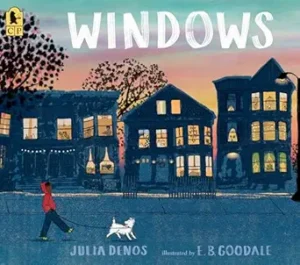
As a boy walks his dog through his neighborhood at twilight, he looks at the glowing windows of the houses he passes.
Each window offers a tiny glimpse into a different life: a family eating dinner, someone dancing, a neighbor reading a book. It’s a literal and metaphorical look at the lives happening all around us.
What kids notice is the cozy, observational feel of the walk. They enjoy “peeking” into the different scenes and imagining what the people in the houses are saying or doing.
It sparks their curiosity about the “unseen” worlds that exist just behind a front door or a curtain.
The story snapshot is a beautiful journey through a community.
It emphasizes that while we all have our own private lives, we are all part of the same neighborhood.
The boy’s walk ends at his own glowing window, where he is welcomed home, grounding the vastness of the world in the safety of his own experience.
Why this book helps is by encouraging the “skepticism muscle” of wonder. It teaches kids to wonder about the people they see every day—to realize that everyone has a home, a story, and a life as full as their own. It’s a perfect visual metaphor for what empathy actually is: looking into another’s world.
Hey, Little Ant — Phillip and Hannah Hoose
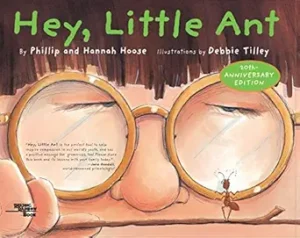
A boy is about to squish an ant with his sneaker when the ant starts talking.
The ant argues for its life, pointing out that it has a family to feed and a job to do, while the boy argues that ants are just “pests.”
The book ends with a question: “What would you do?”
What kids notice is the dramatic shift in perspective. The illustrations flip between the boy’s giant view of the ant and the ant’s terrifying view of the giant sneaker.
They see the “fairness” of the ant’s argument and the casualness of the boy’s initial decision to squish it.
The story snapshot is a debate about the value of life, no matter how small. It forces the reader to step into the tiny shoes (or six legs) of the ant and feel the vulnerability of being misunderstood.
It challenges the “instant gratification” of a physical impulse with the slower, deeper work of empathy.
Why this book helps is by sparking a conversation about power and compassion.
It helps children realize that just because we can do something doesn’t mean we should. It bridges the gap by making the smallest “other” feel significant and worthy of protection.
Make Your Child the Hero of Their Own Empathy Story
While these books are incredible windows into the lives of others, there is a special kind of magic that happens when a child sees themselves as the protagonist.
Scrively allows you to create 100% custom children’s books where your child is the star.
By placing your child directly into stories about kindness, sharing, and noticing others, you aren’t just reading them a lesson—you are giving them a personal experience in empathy.
Imagine a book where your child is the one who notices the “invisible” boy or the one who helps the zookeeper.
It transforms the abstract concept of virtue into a personal identity, helping them see themselves as the kind of person who bridges the gap every single day.
Bridging the empathy gap isn’t something that happens overnight, and it’s certainly not something we can force with a lecture.
It’s a slow, beautiful process of opening doors and windows through the stories we share.
Every time you close a book and ask, “How do you think they felt when that happened?” you are laying another brick in that bridge.
You are giving your child the tools to not only see the girl who tripped in the playground but to feel a little bit of that sting themselves—and then have the courage to go over and help her up.
That is the real magic of literature: it makes the world a little smaller, a little kinder, and a lot more connected.